Did you know that one could walk from Kyushu to Honshu? That’s right, Japan’s third-largest island is connected to its largest by a pedestrian tunnel. Coincidentally, it’s also possible to go from Honshu to Shikoku, the country’s fourth-largest, by bike (or a very long walk), but that’s awfully unfair to knees.
Construction on the Kanmon Tunnel (関門国道トンネル) began in 1936, but was only completed in March 1958 on account of World War II.
For those of you who can read the Japanese in the parentheses, you might have noticed that it translates as “Kanmon National Road Tunnel.” That’s no lie…atop the 2259 foot (780 meter) pedestrian and bicycle tunnel is an 11,355 foot (3461 meter) car tunnel.
As my hotel was in Moji-ko (門司港), a part of Kitakyushu city (on Kyushu island), I walked from there to the Honshu city of Shimonoseki (下関). The name Kanmon 関門 — e.g. the tunnel, the strait, the bridge — stems from the two places it straddles.
Speaking of bridges–
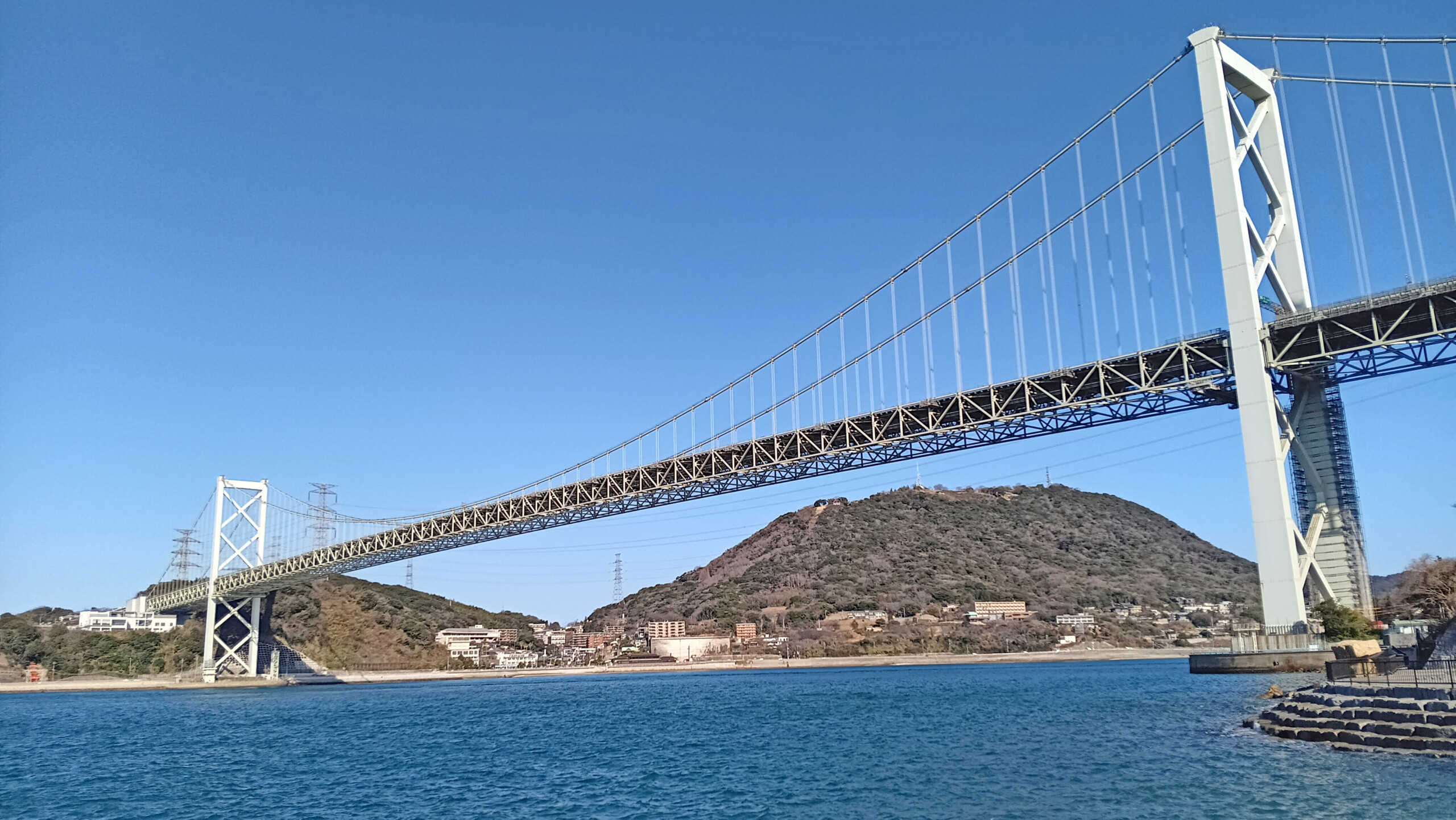
If you’re looking for the pedestrian tunnel, you’d be hard-pressed to find a more helpful landmark than the Kanmon Bridge. On both sides, where you would begin your walk from Kyushu to Honshu is quite close to the bridge.Entr
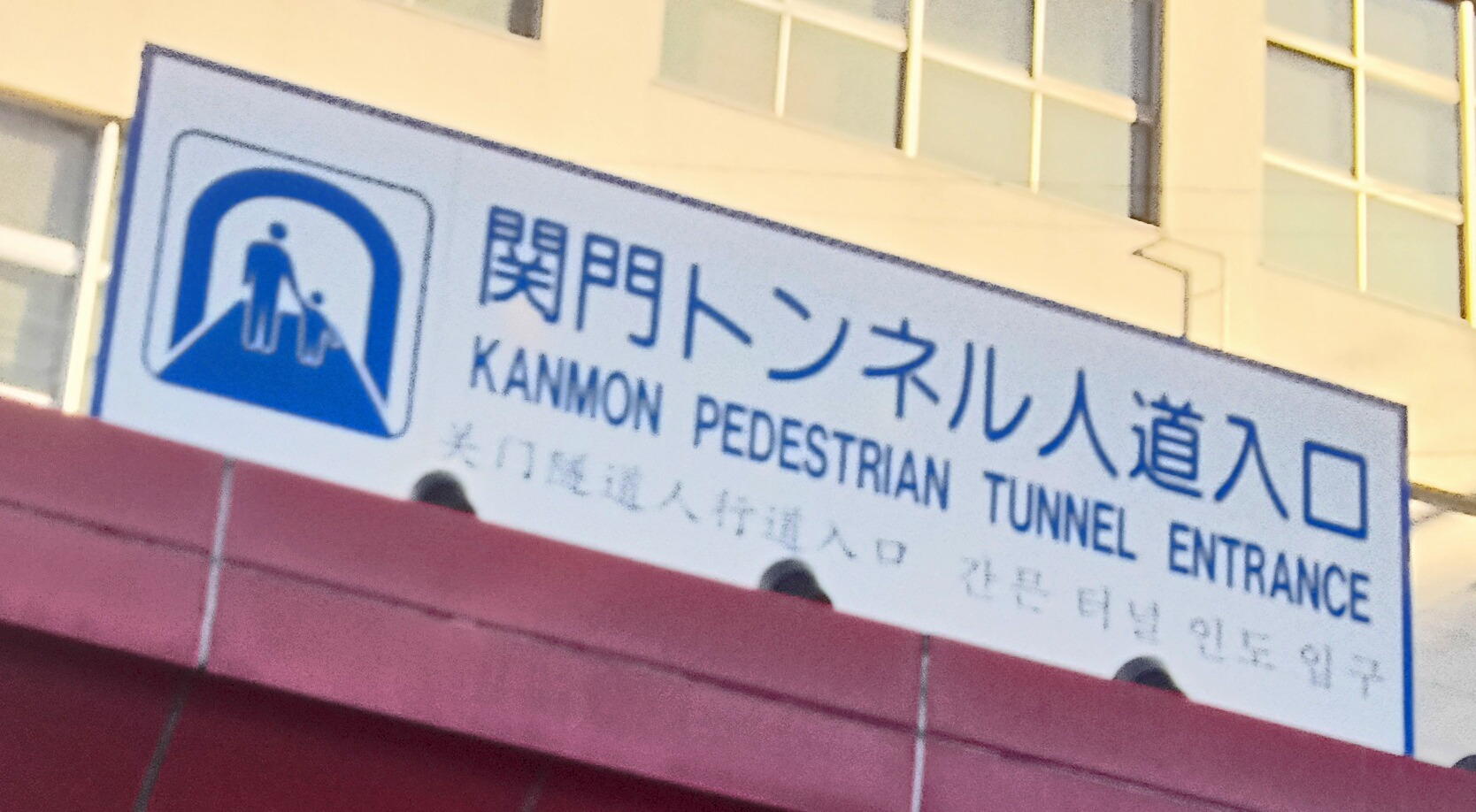
Entry is typically by elevator; pedestrians can freely use the tunnel, but those with bicycles and scooters have to (should?) drop 20 yen in an honor system coffer.
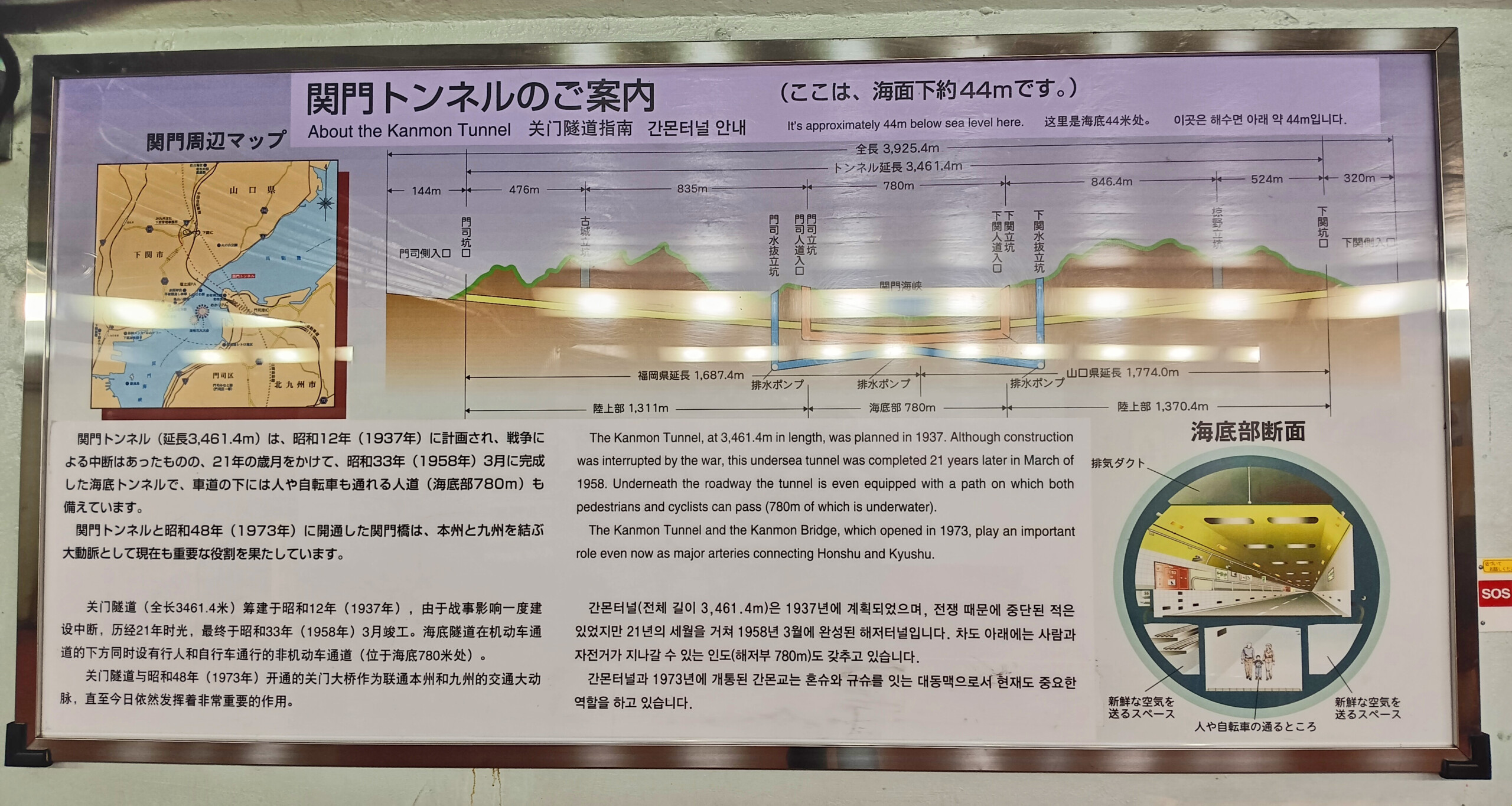
I felt a bit gypped by my experience, because there was construction work happening right at the point where the sign would be. The sign in question would’ve designated the point where one crosses from one city to the other. Fiddlesticks.
I neglected to take a photo of the tunnel, but I did make a short holistic video of the experience.
Once you’re in Shimonoseki, you can take a right from the elevator, cross the street, the another right to head downtown. Along the way, there’s:
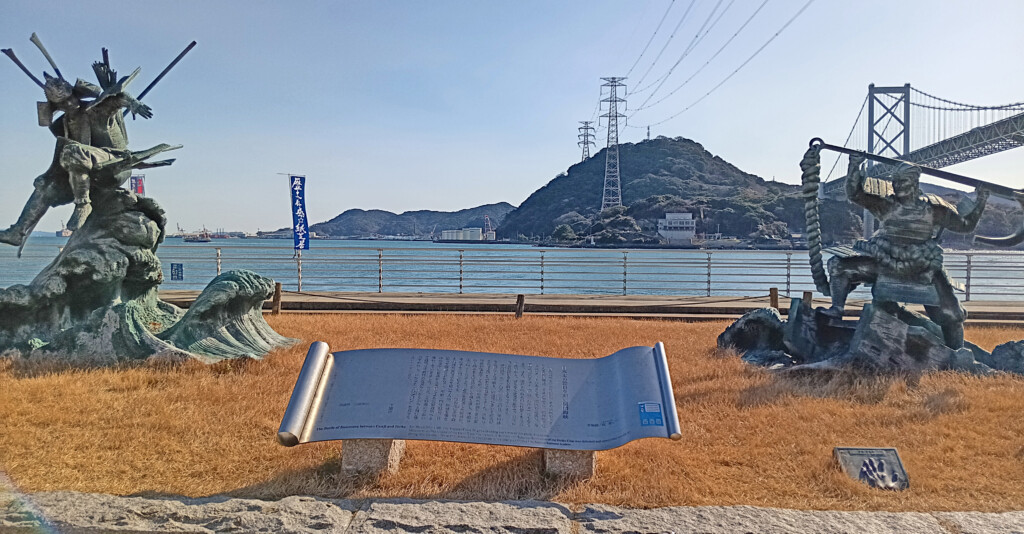
– a monument to the 1185 CE Battle of Dan no Ura, which led to the Minamoto clan seizing control of the country, and the samurai class making its appearance.
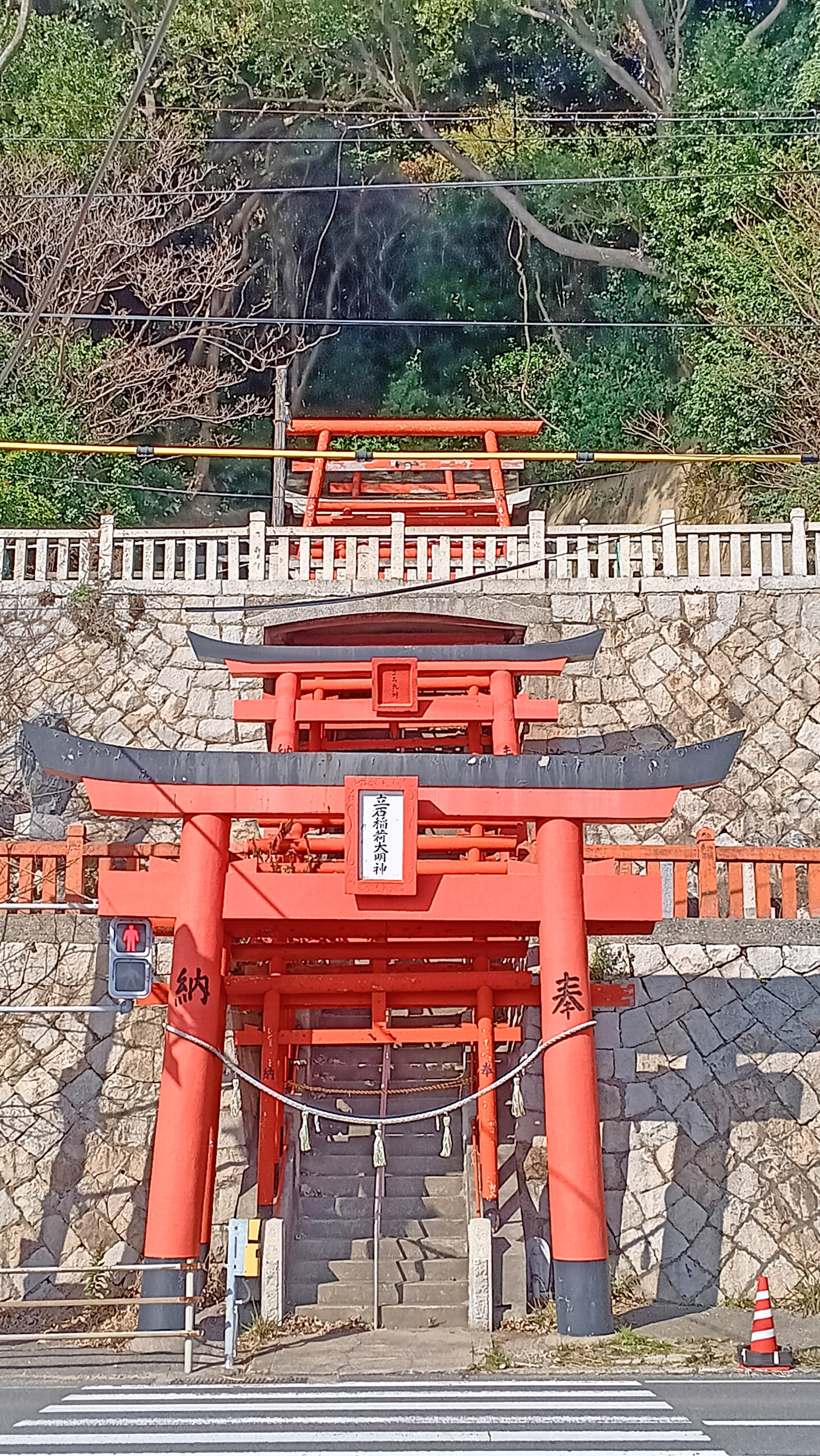
– Tateishi Inari Daimyojin shrine (Shintoism), accessible by crosswalk
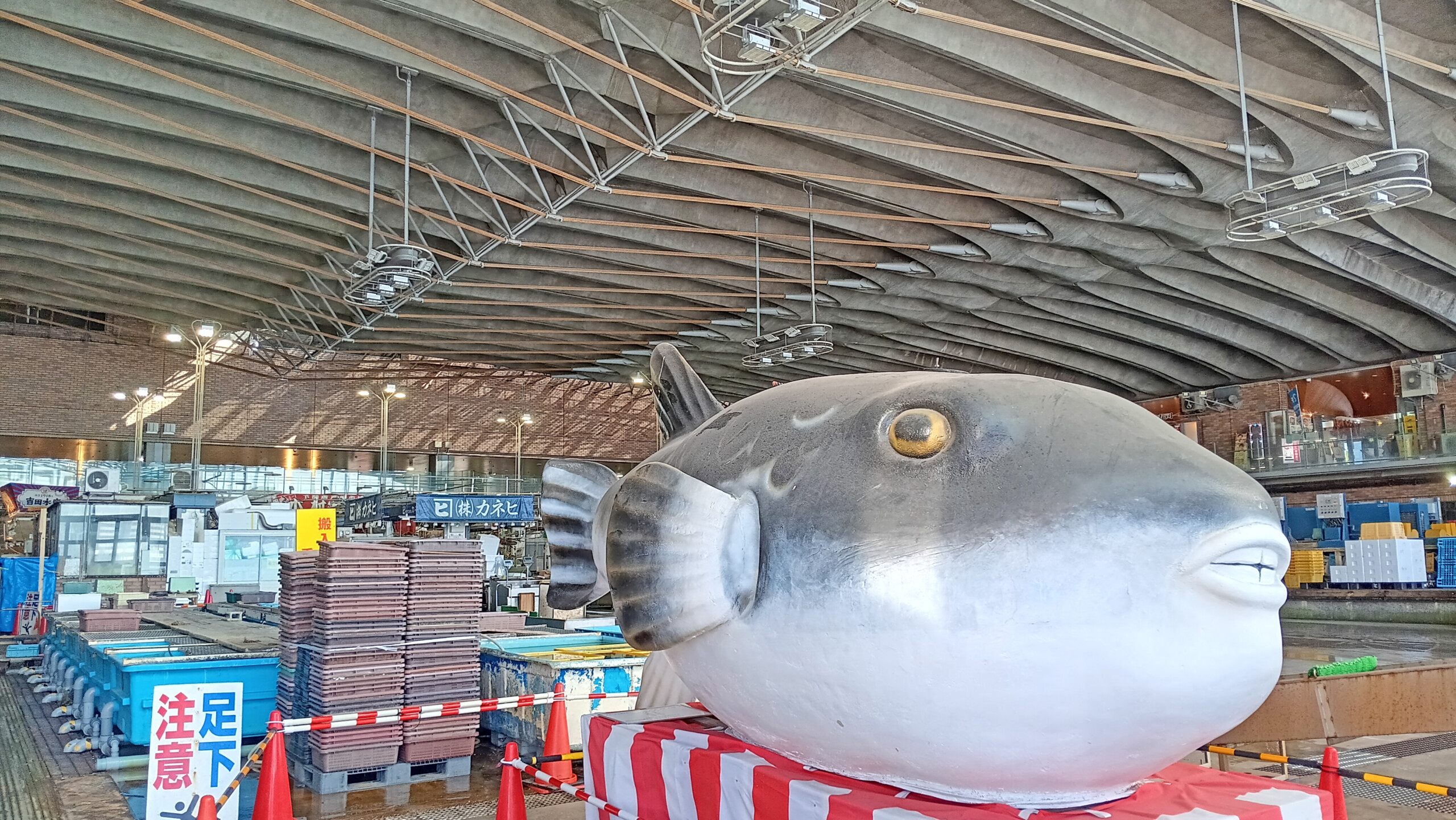
– Karato Market, which sees a brisk trade in everyone’s favorite deadly favorite, fugu
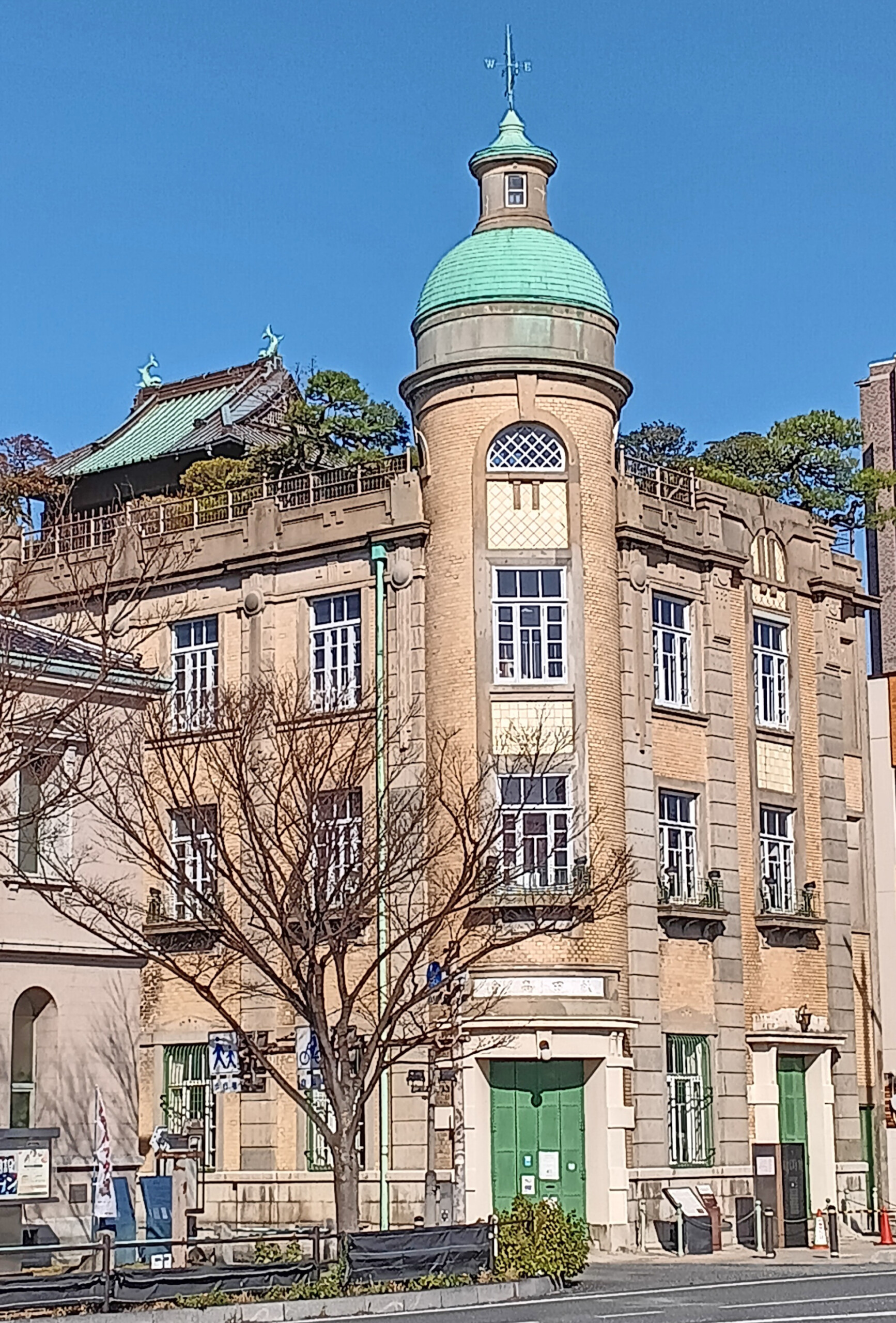
– a bunch of late 19th – early 20th century buildings that reflect Shimonseki’s history as a port town.
The one below is the former Akita Chamber of Commerce Building, built in 1915, and now used as Shimonseki’s tourist information center. Note the Japanese influences on the roof.
Then again, Moji-ko has its own assortment of similar structures.
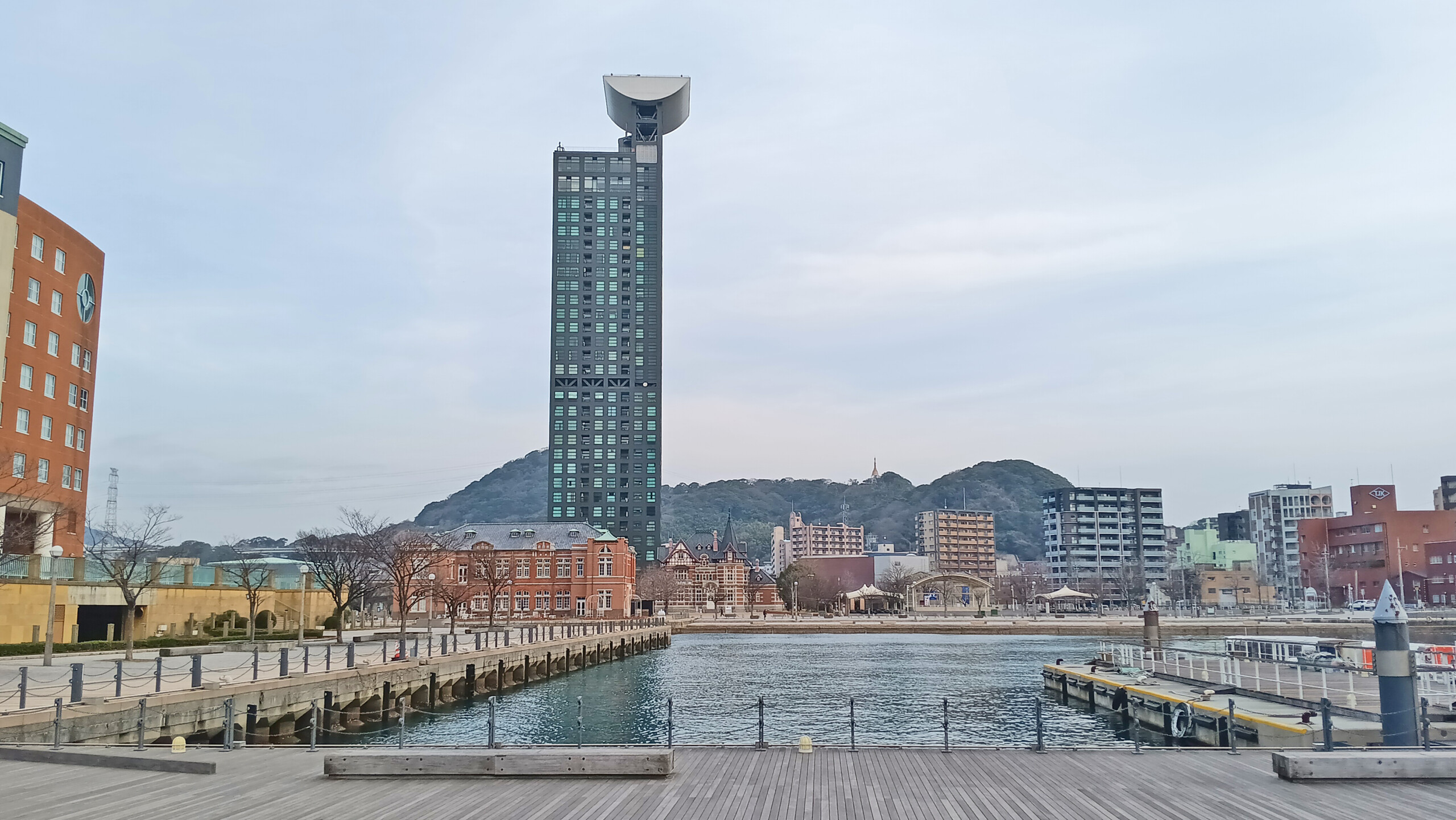
Wait a sec, that’s not 100 years old. True. But that oddly-shaped 31-story condo tower and observation deck was designed by none other than Kurokawa Kisho, the man behind Tokyo’s Nakagin Capsule Tower.
Back on subject, here’s the old gem of Moji-ko:
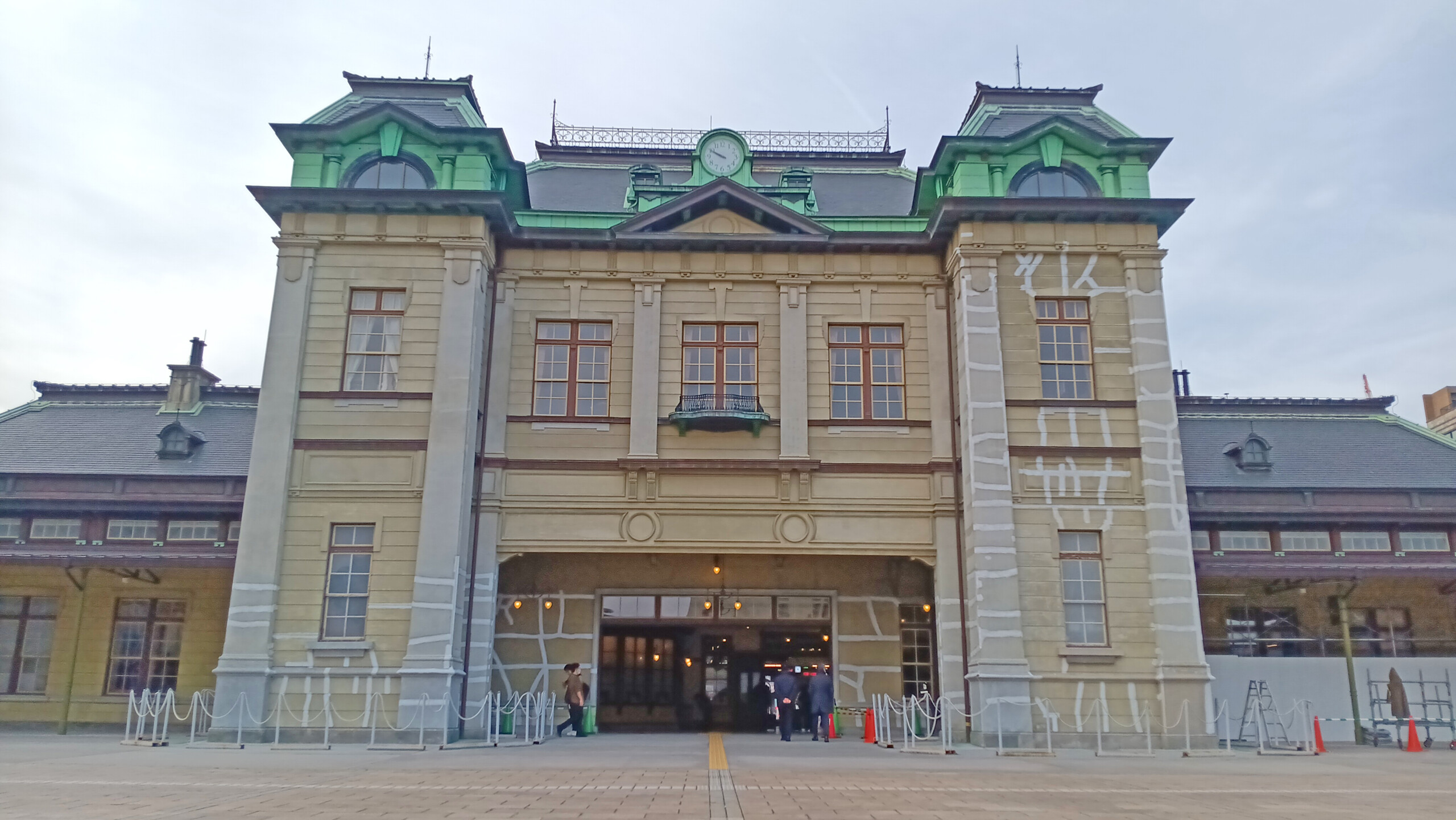
It’s Mojiko train station, built in 1914, restored and reopened in 2019.
Never mind the national rail pass, where’s the pedestrian tunnel to Hokkaido?

Leave a Reply