Very slowly and gradually, East Asia is opening up its borders.

For folks who are vaccinated, South Korean pandemic travel requirements are getting a tad easier. Just a tad.
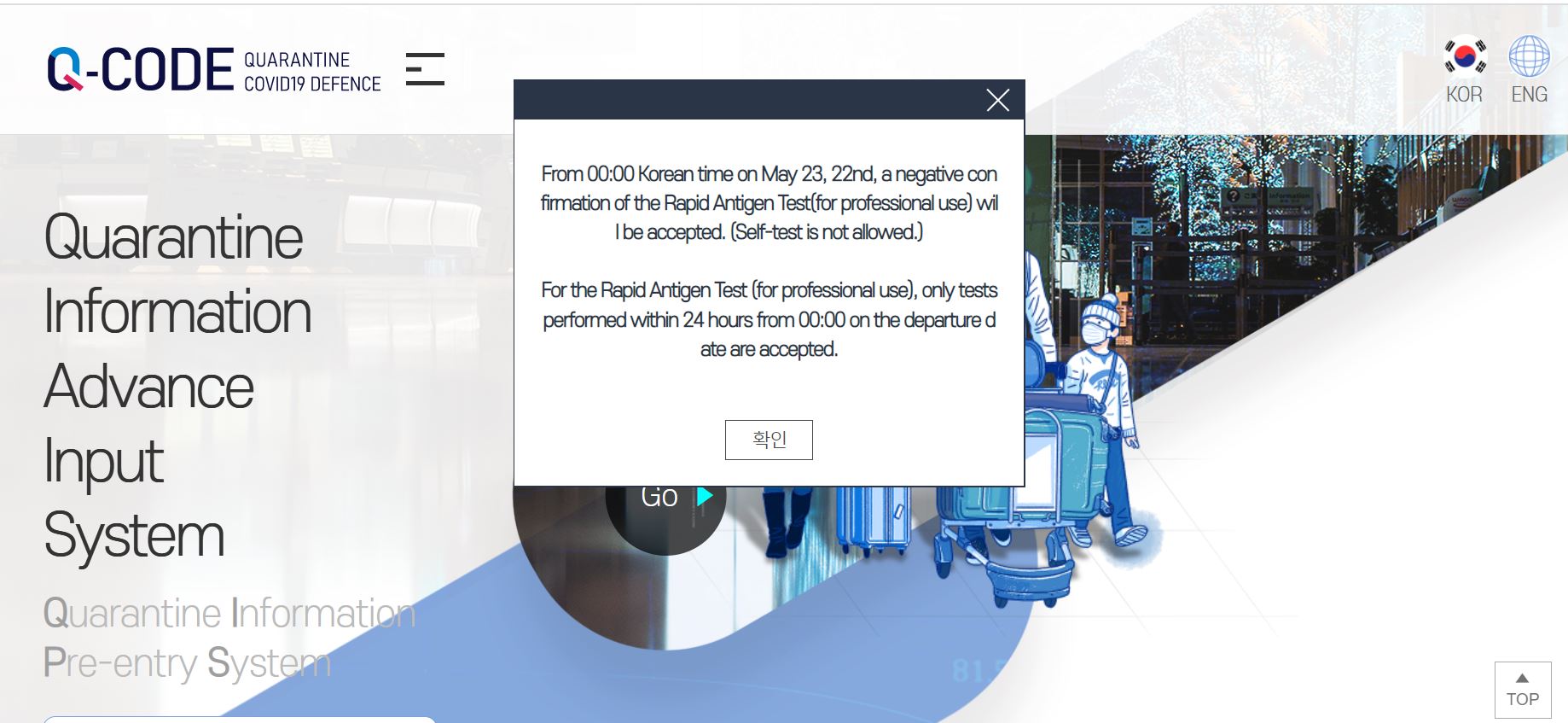
From today, 23 May, when visiting South Korea, you can either take a PCR test that was taken within 48 hours of departure, or now a rapid antigen test (RAT) taken within 24 hours of departure. PCR tests are generally much more costly than RATs, and consequently take more time to process the results.
And if you’re always frustrated about when exactly you should be taking those tests, check out this screenshot:
But don’t try to get COVID-19 while in transit, because South Korea has something in store for you after arrival.
If you’re flying to South Korea and landing before 1 June, you will need to take a PCR test on the day you land, and if you’re staying a week, you’ll have to take a rapid antigen test on day 6 or 7. But for arrivals from 1 June onward, a PCR test will be mandatory within 3 days of arrival, and the rapid antigen test will only be recommended on day 6 or 7. “Recommended.”

For info about getting tested outside of South Korea, check out this page. The rules are different for the unvaccinated, and for travelers 18 and younger; for more information on those two categories, as well as all entry procedures including applying for e-visas, check out the Korea Travel Safety Guidelines.