In spite of the Alaska Airlines awards booking page acting more fubar than not, I was able to book an unexpectedly good Korean Air business class deal from Tianjin, China (TSN) to Kagoshima, Japan (KOJ) via Seoul Incheon (ICN).
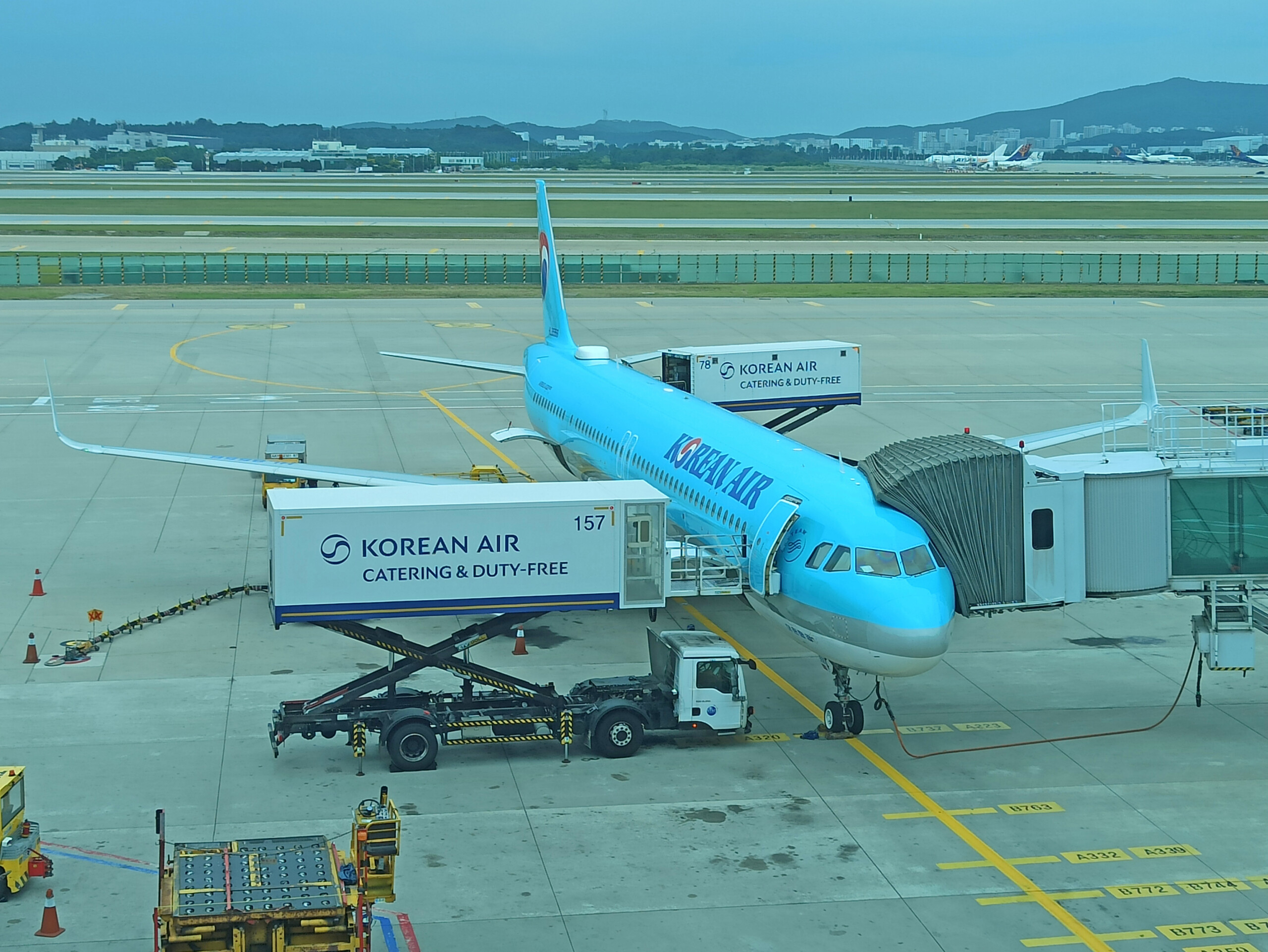
Korean Air (KE) uses Terminal 2 at Seoul Incheon International Airport. An unintended perk is that the AREX train, which connects with downtown Seoul, starts at Terminal 2; in other words, once you get past the poorly-planned escalator scrum at the boarding platform, there’s a decent chance you’ll get a seat for the hour+ trip.
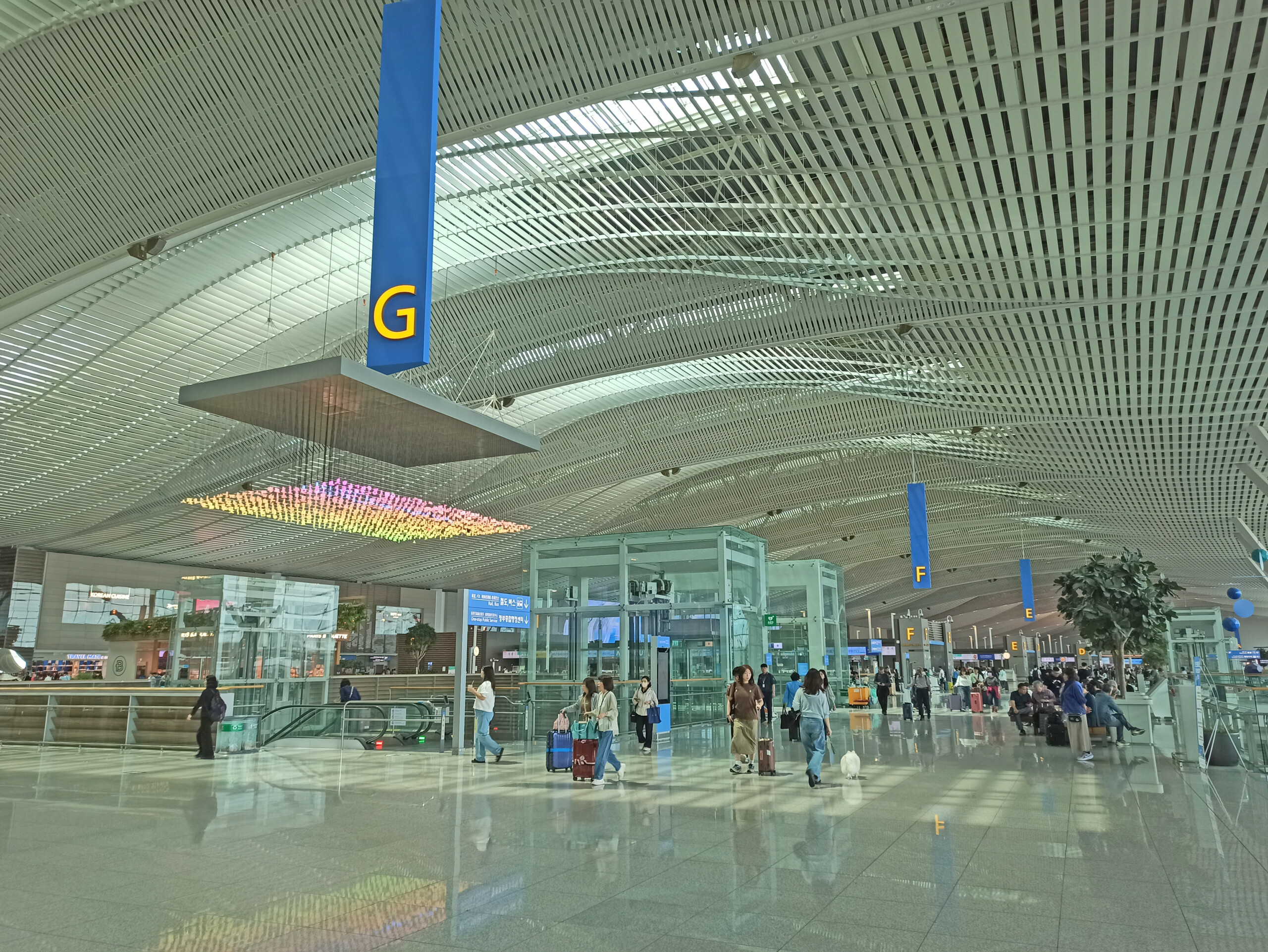
This time, however, I stayed in Unseo, i.e. the (Tokyo) Narita analog to Incheon Airport. Unseo is about 15 minutes by AREX from Terminal 2.
Check-in
For passengers flying in business/first, and/or those with certain airline status, veer towards check-in area A.
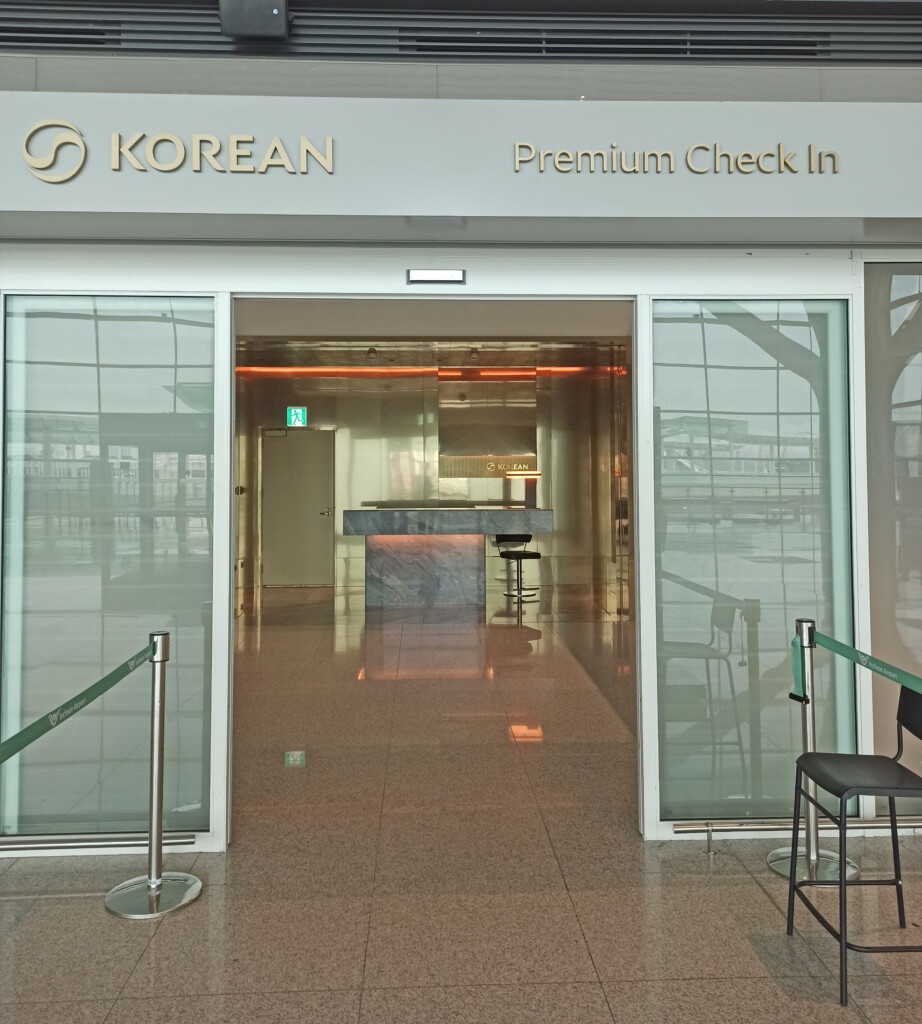
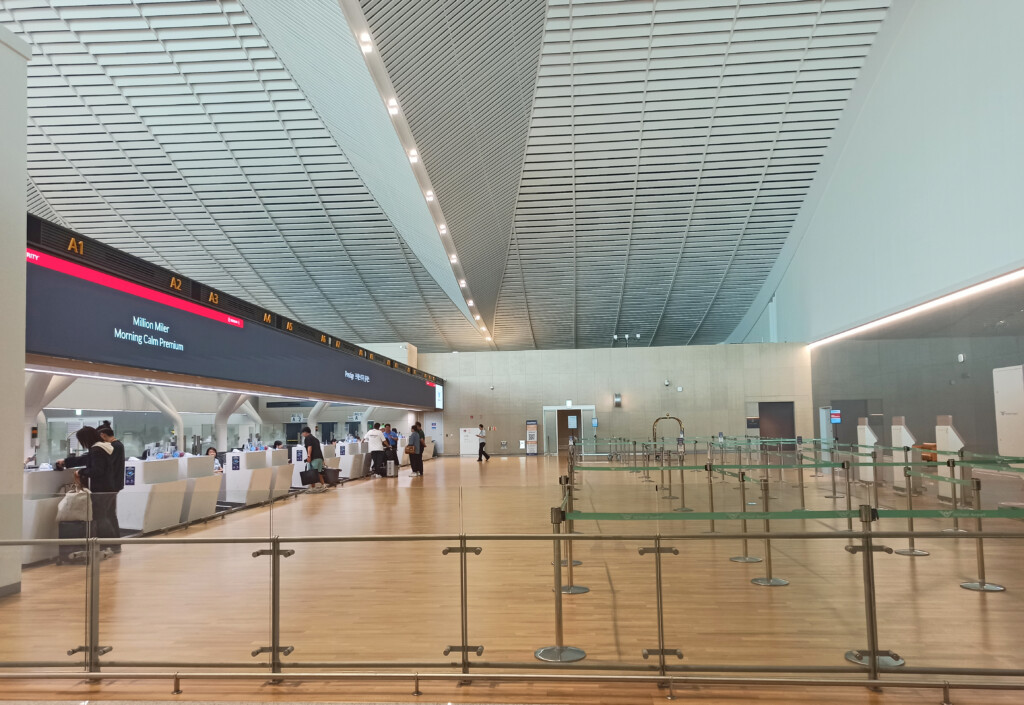
Although I had already received the Kagoshima boarding pass upon checking-in at Tianjin, I needed to check another bag. After long forgetting about one of my favorite toothpastes, a serendipitous encounter at a Lotte Mart hypermarket in Unseo reminded me of the “pine salt” variety. Of course, the real issue is that the containers were each above 100mL (thanks for nothing, USA).
Fortunately, this Korean Air business class ticket provided for two checked bags…phew. The check-in agent helpfully placed tape across the bin, so that the minuscule lightweight bag wouldn’t get lost in the conveyor maze.
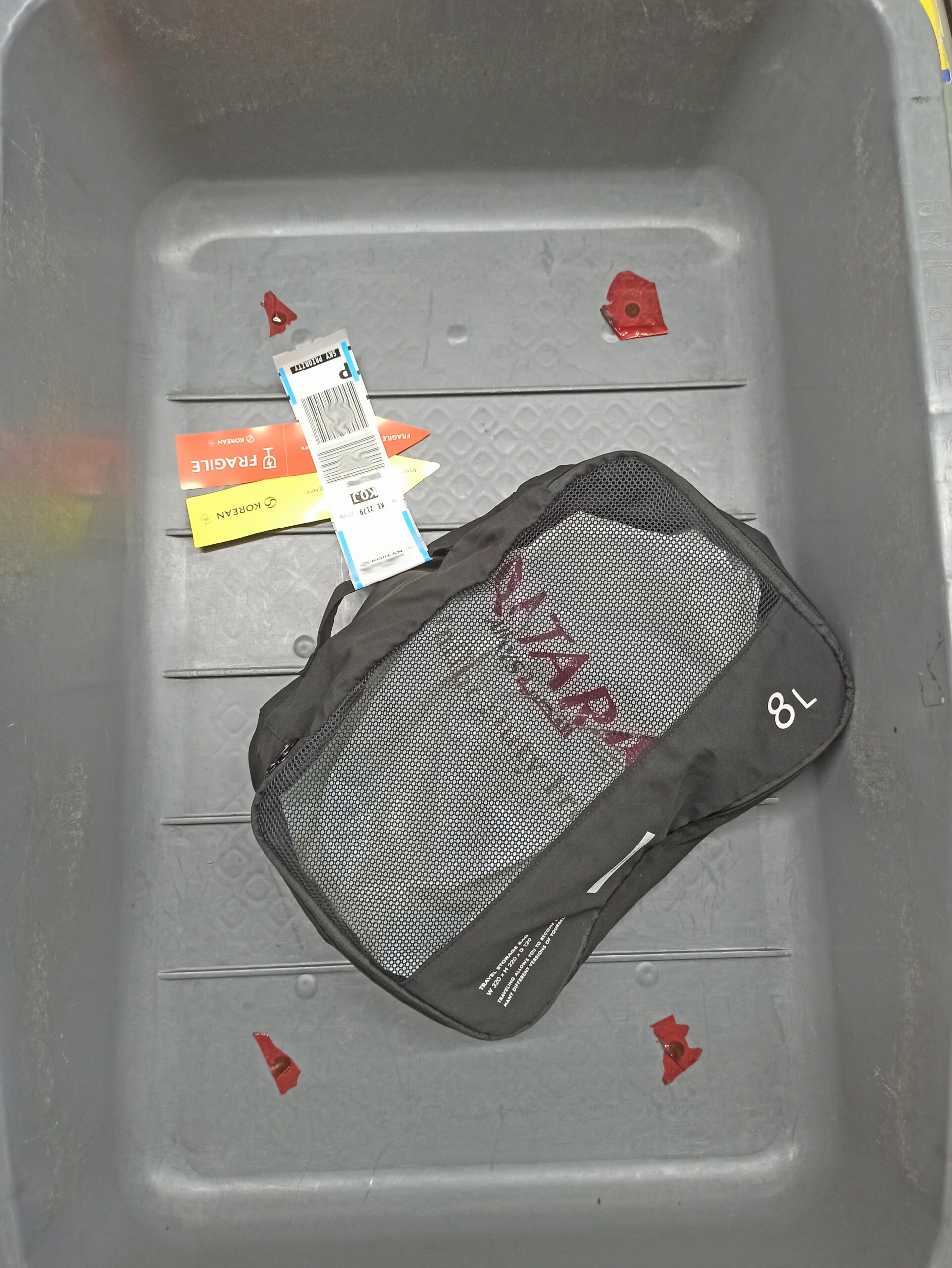
Also, I happened to be asked by the agent about an onward ticket from Japan. After showing her 15 Japan entry stamps from the past 16 months, she changed the subject.
Regrettably, Korean Air doesn’t have a dedicated security check. At the same time, I happened to be at the airport early enough (for whatever reason, it was around 11:30am) to only queue for about two minutes. Emigration, in the form of electronic gates, was quite fast, too.
Sky Hub Lounge
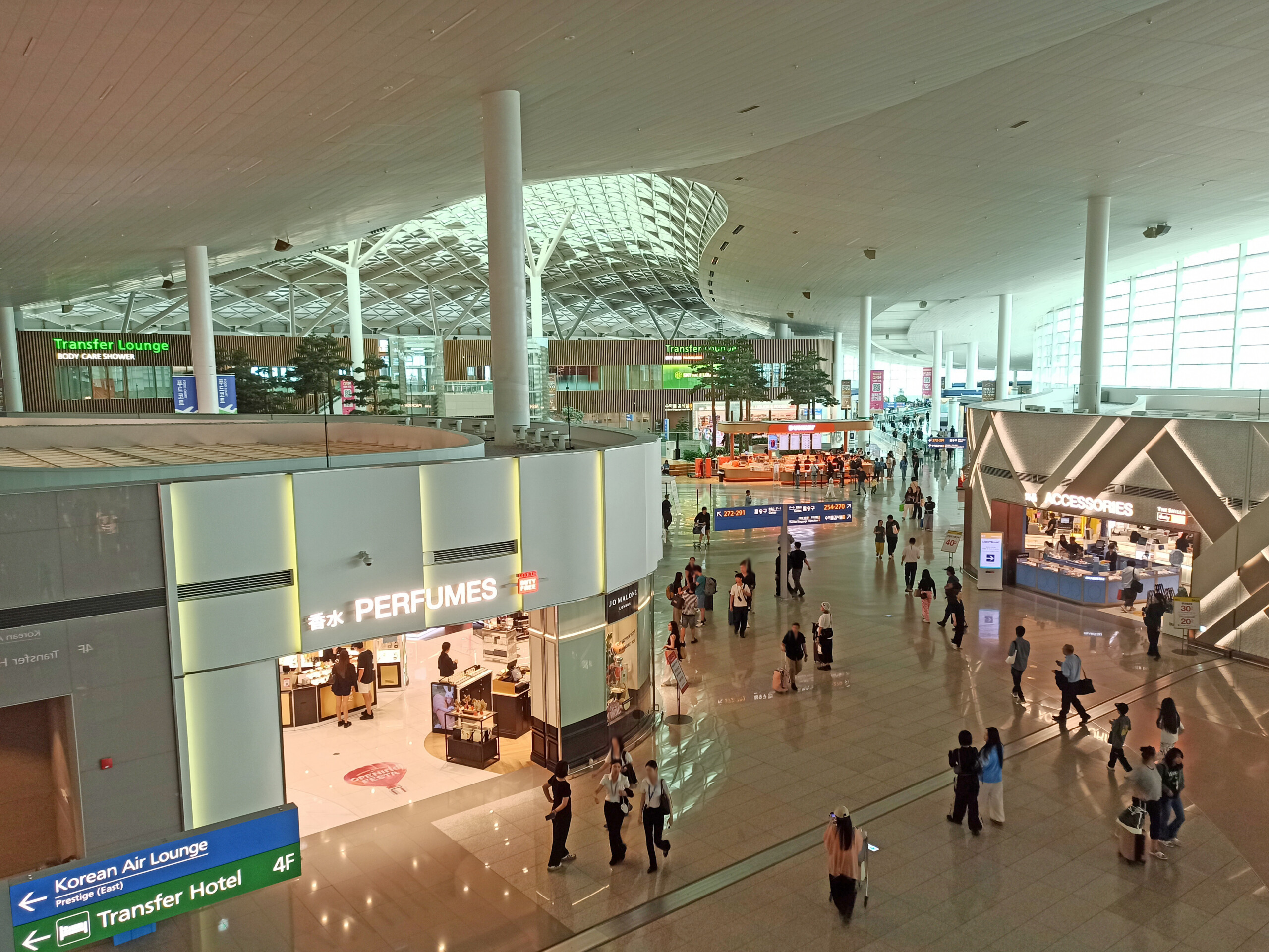
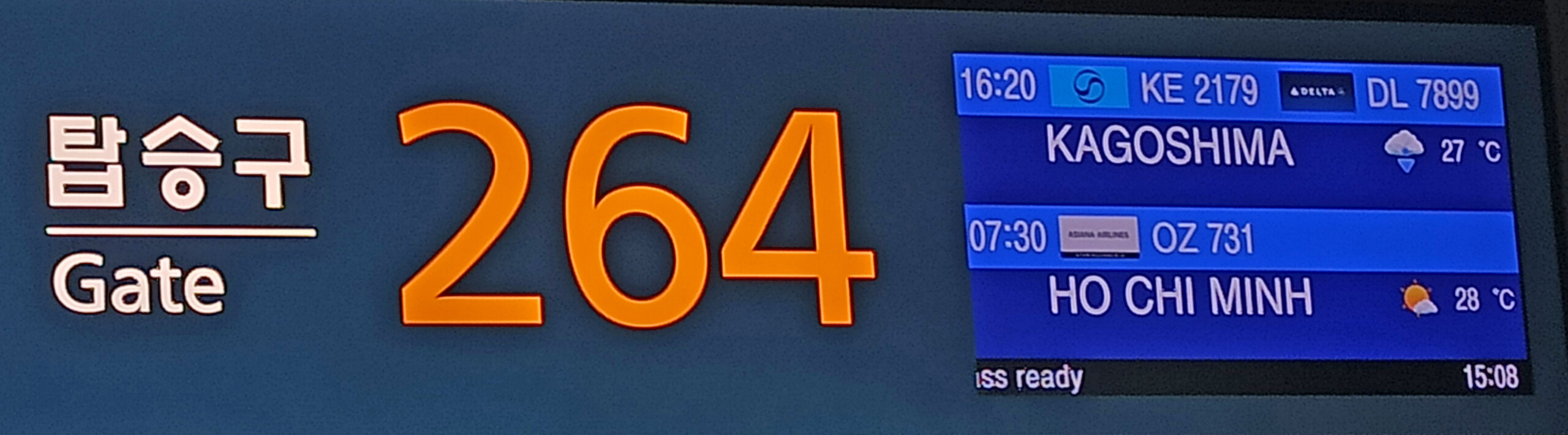
After dropping off my carry-ons at the gate 253 Korean Air Lounge, I wanted to see what the Priority Pass lounge was like. That is, the closest one to gate 253. It’s called the Sky Hub Lounge, which is an escalator ride up one level from the main dining/shopping level.
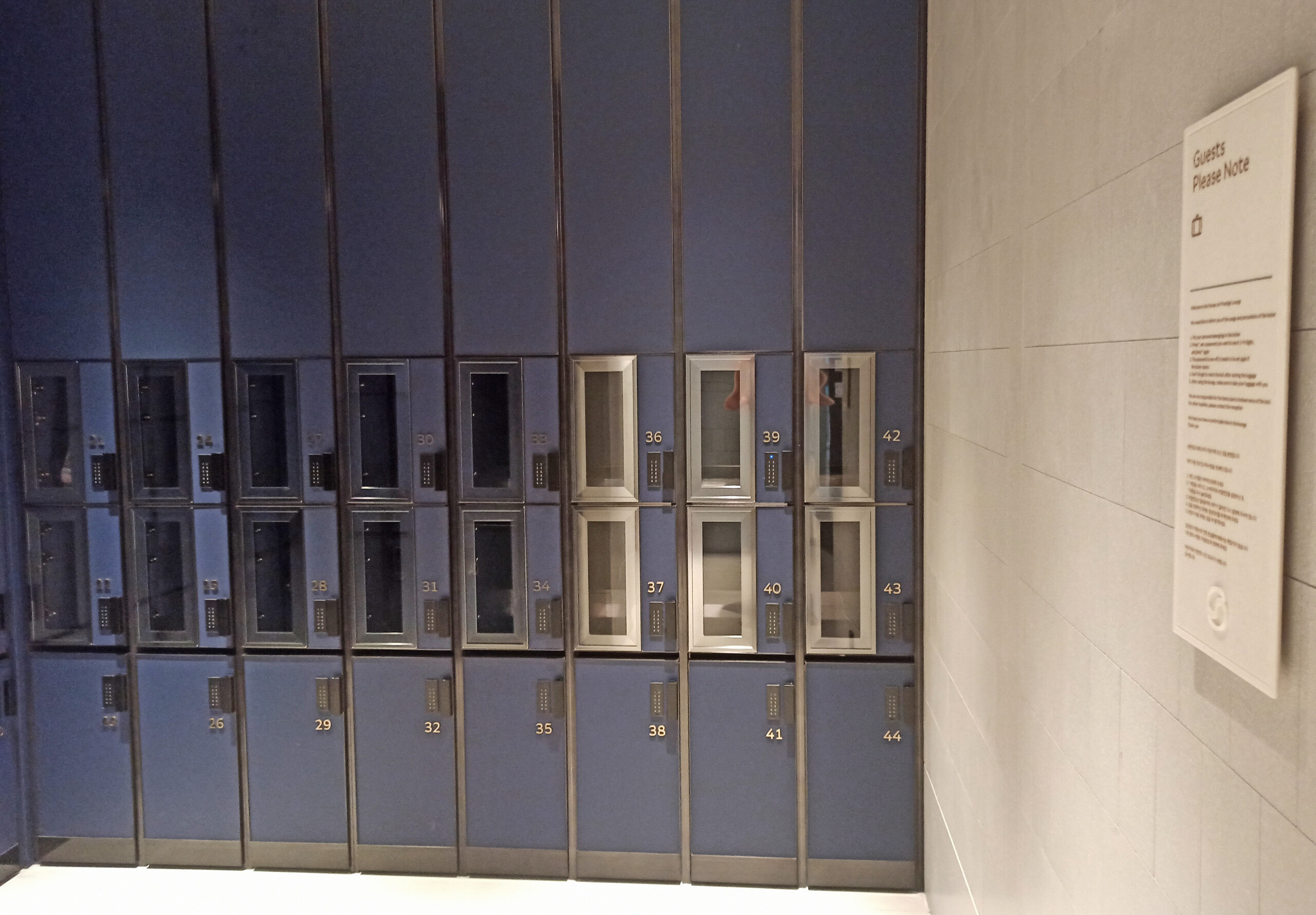
Given that I did have KE Lounge access, too, I didn’t want to take up someone else’s seat for too long. It was more to see its food and beverage options, which for all but one reason seemed better than KE’s offerings.
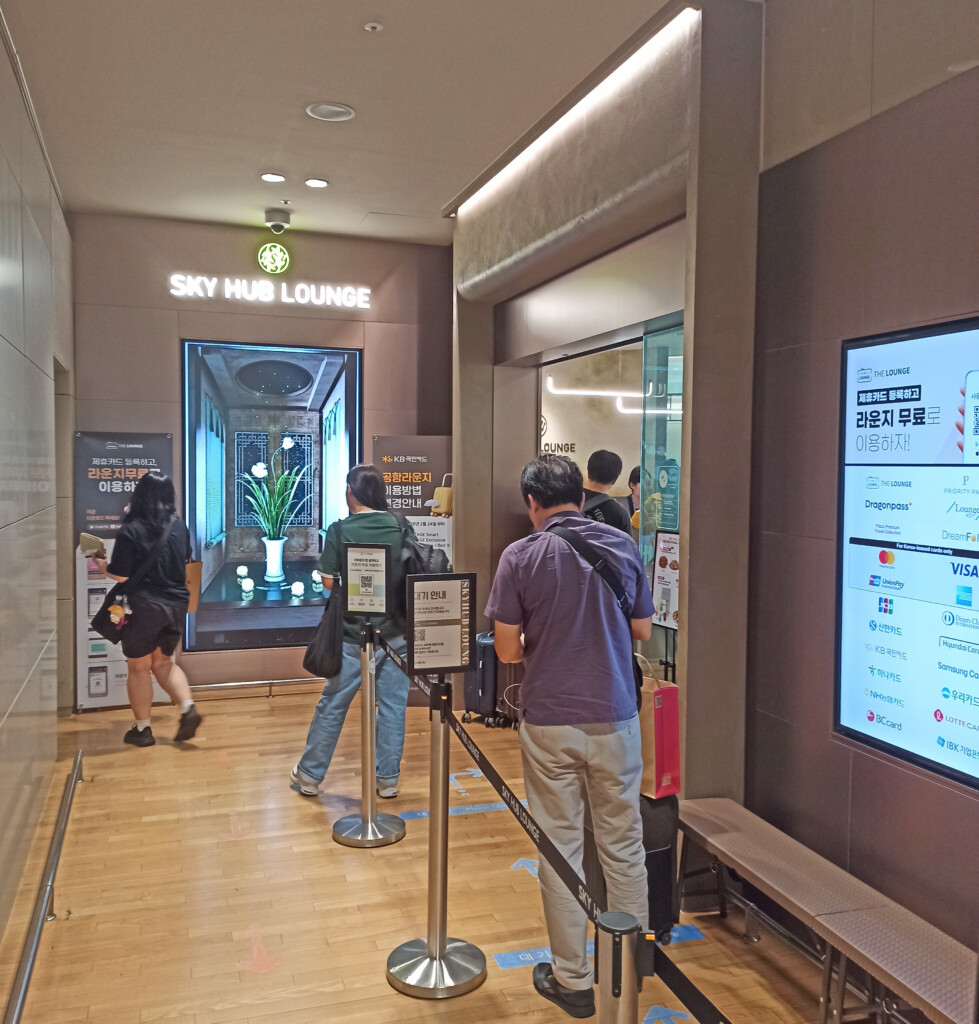
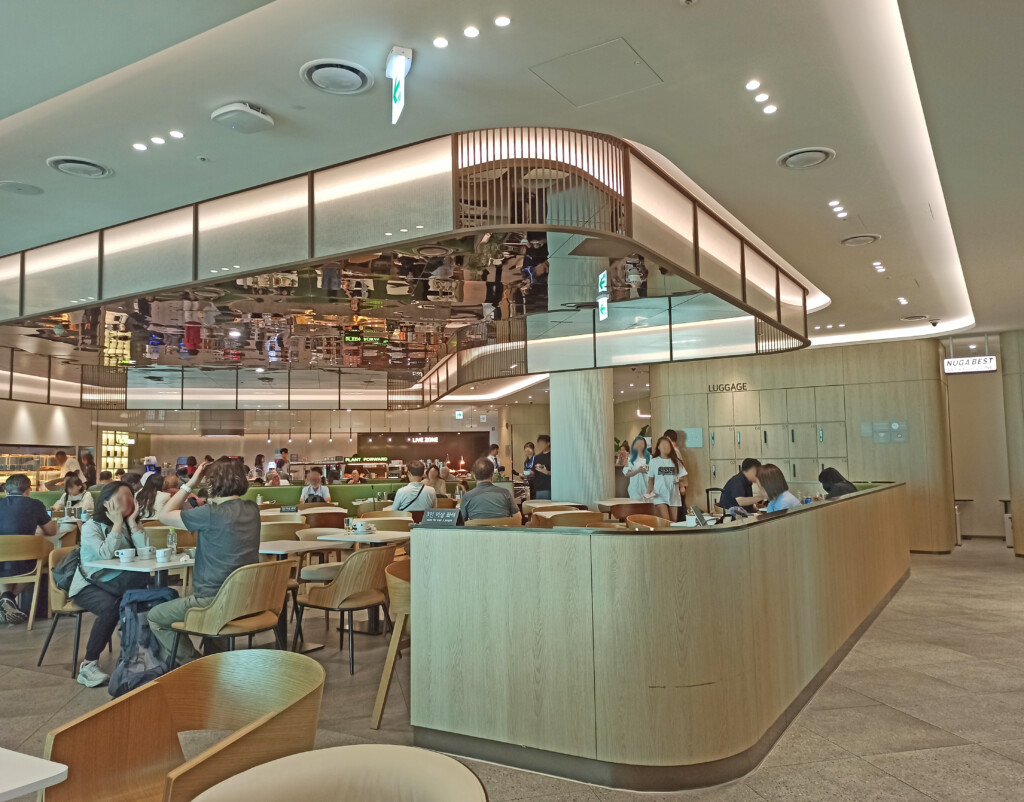
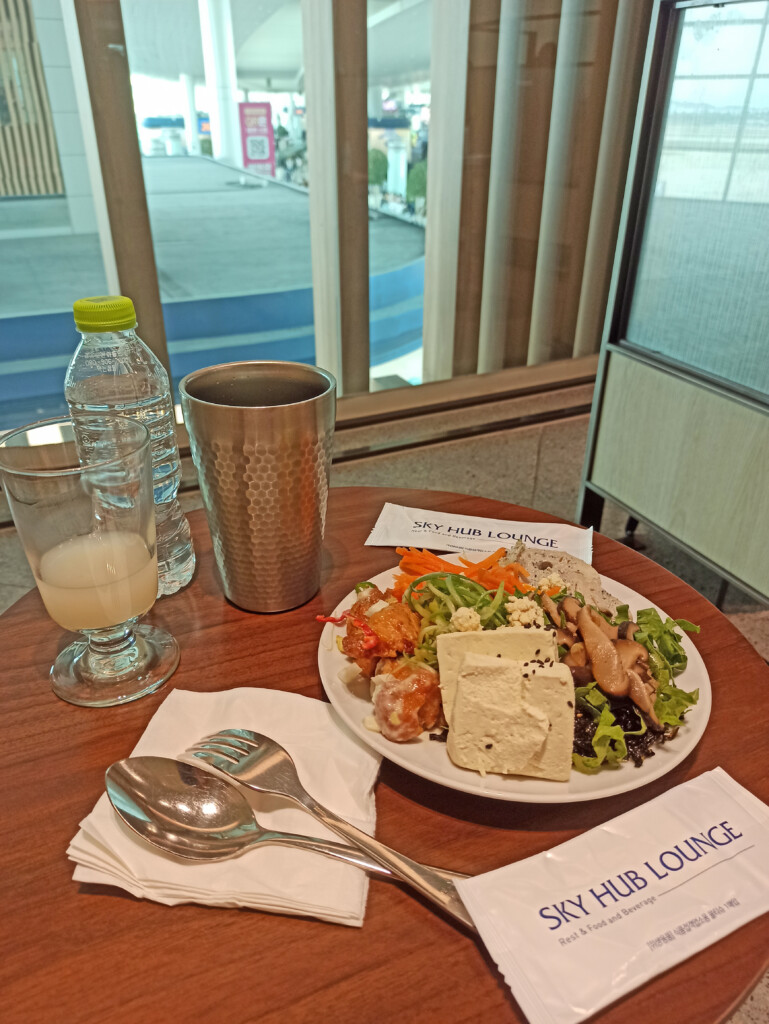
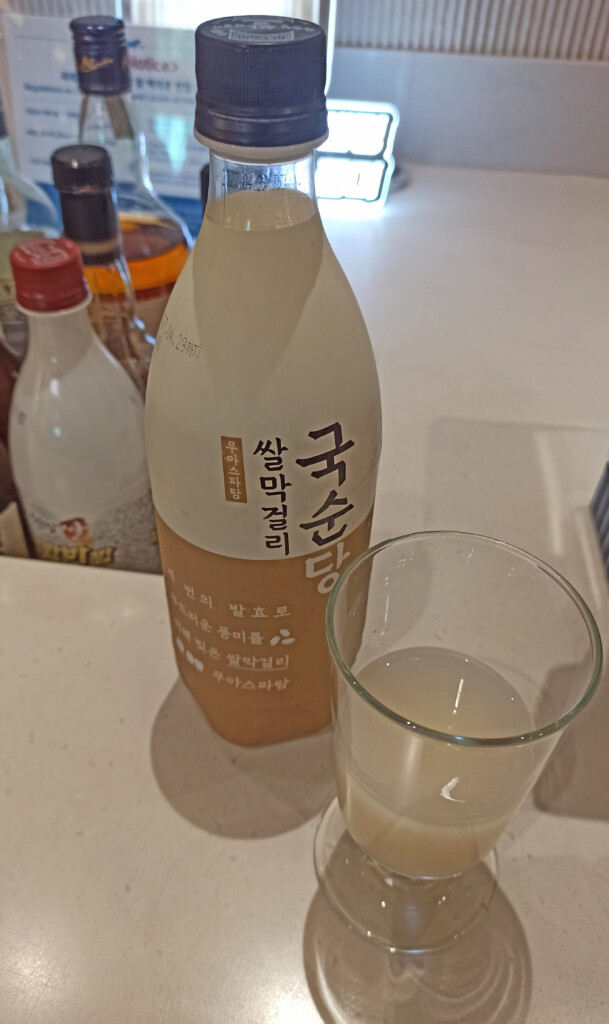
It even had Korean liquors (drinks other than beer), which KE’s lounges didn’t have. Kudos to the Sky Hub Lounge’s food selection, which surpassed almost all other Priority Pass lounges that I’ve tried. Yes, it’s fair to say that my taste buds really like Korean food.
Anyway, let’s move on to the Korean Air options, called the Prestige Lounges.
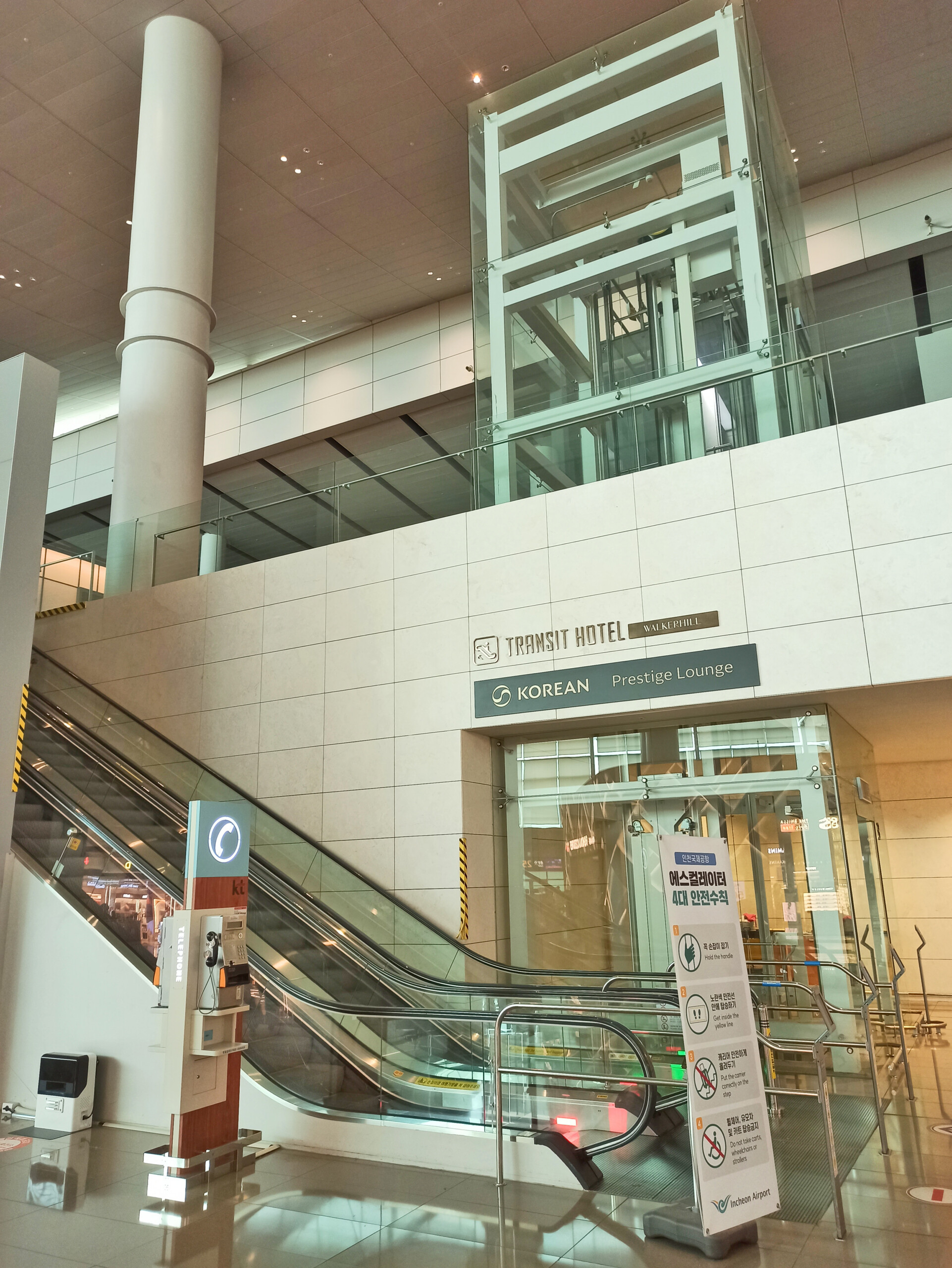
Korean Air Prestige Business Lounge(s) by gate 253.
These, too, are up one level from where emigration leaves you.
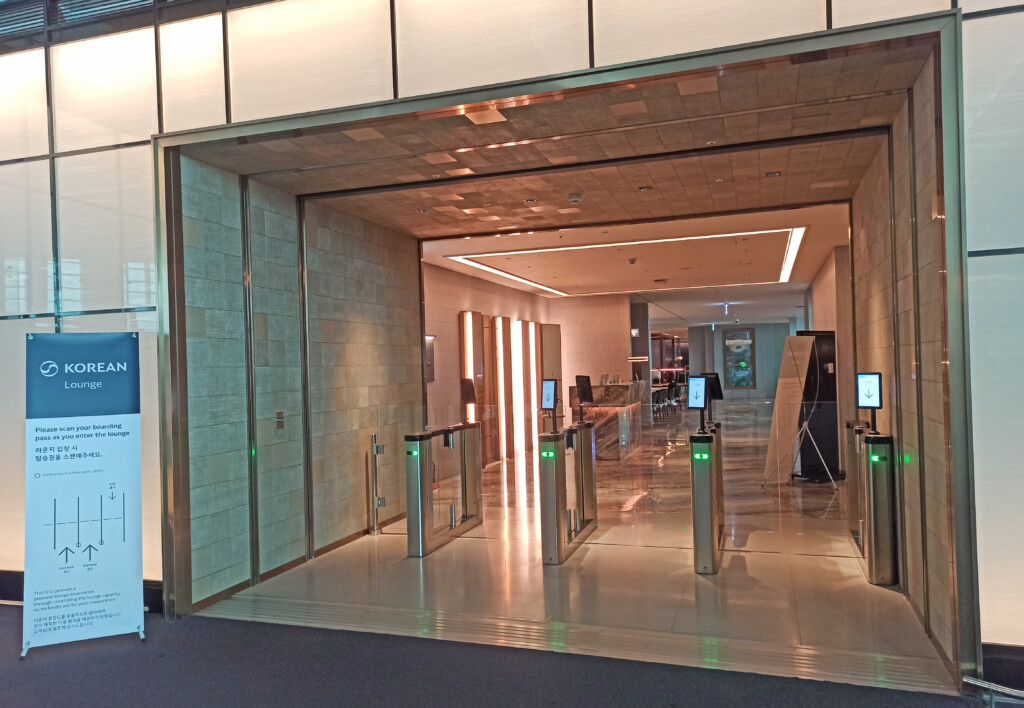
In theory, passengers are supposed to show boarding passes to the lounge dragons — err, docile dragons — to enter, but I mostly skipped that part and scanned the ticket to enter/exit the lounge. Yes, one must scan to exit, too:/ (maybe this is related to some crowd-control function?)
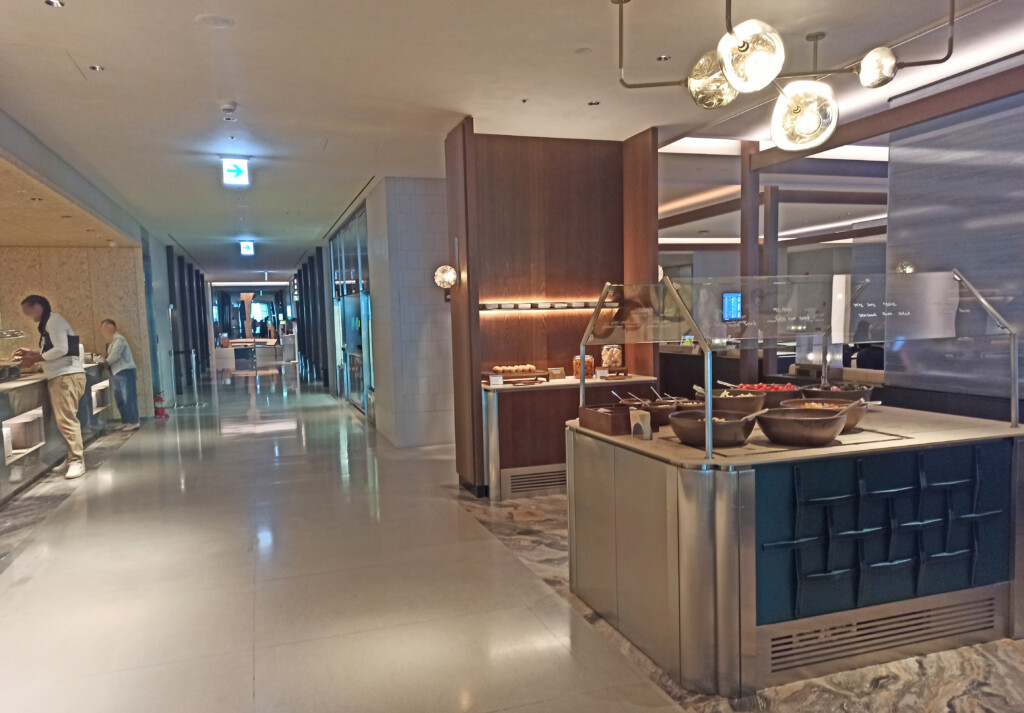
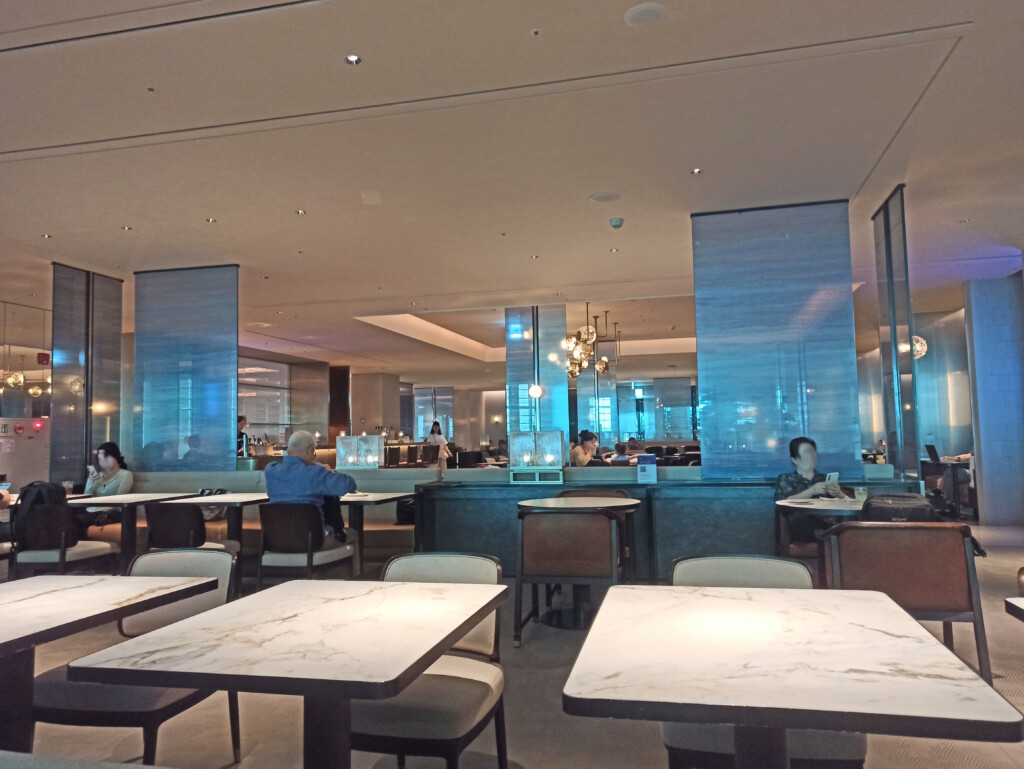
In any event, with remodeling having been completed this past winter, I was most keen to see…what else, its buffet.
And you know what, it was mostly a disappointment.
The mostly refers to the sad selection of pasta, potatoes, Detroit-style pizza (what, no love for Altoona?), and beverages that can’t readily be taken outside of the lounge…. there was a salad bar, and some cold cuts/cheese, but meh.
How about Korean food? How about it?
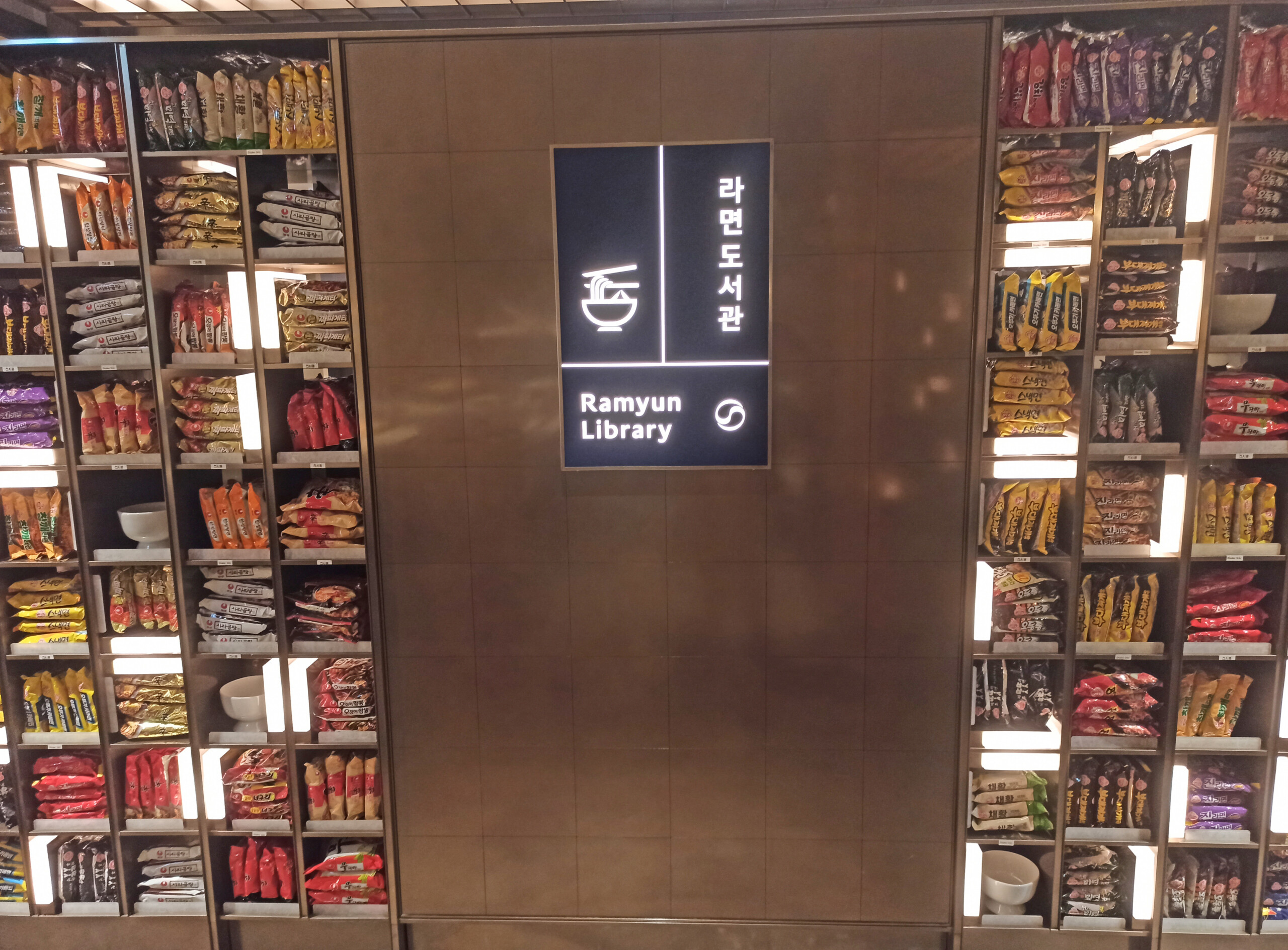
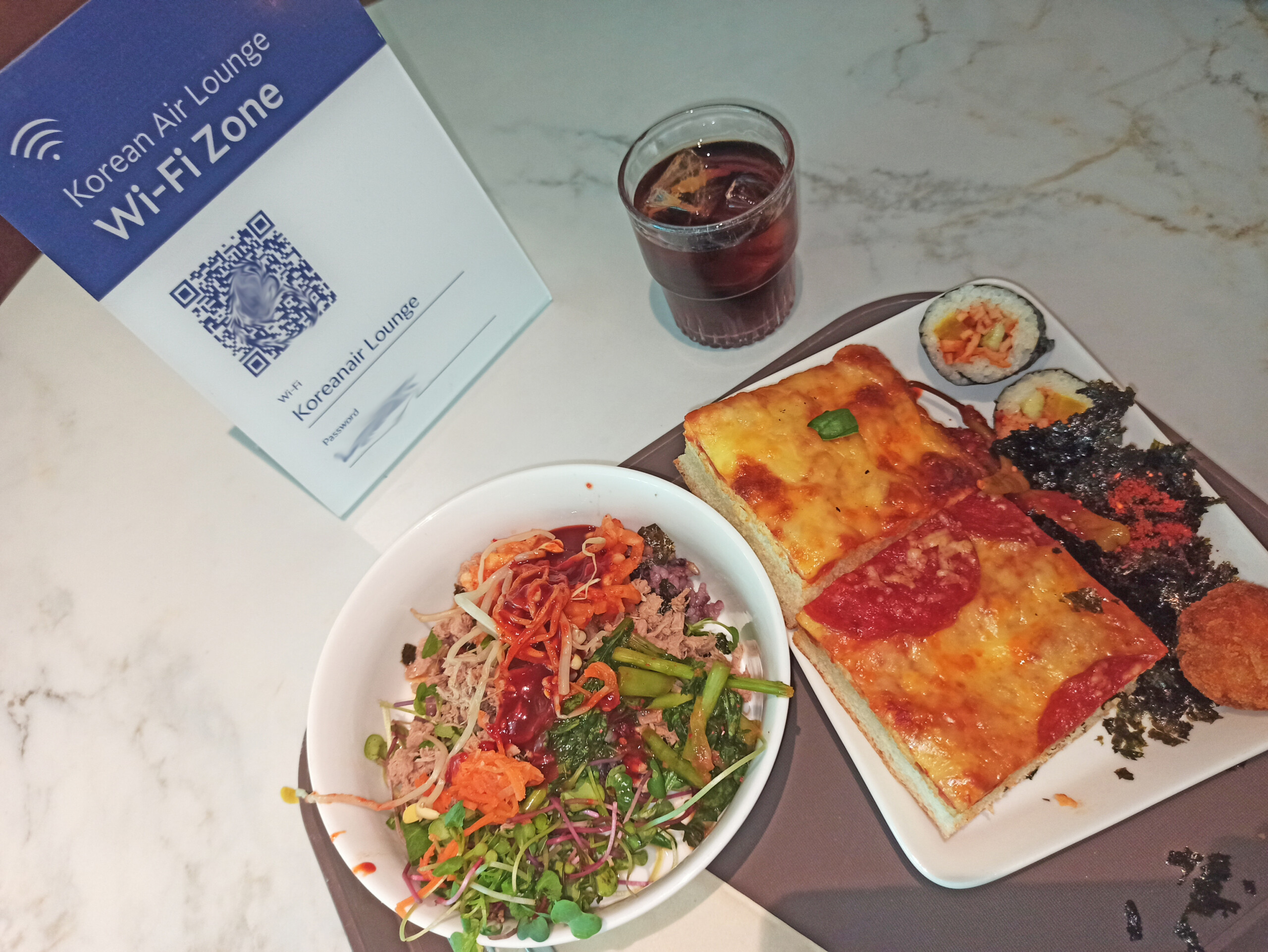
There were noodles, a ramyun (ramen) “library,” and the one part of the buffet that kept me coming back, the bibimbap station.
Firstly, a ramyun library? Yeah, simply choose your kidney failure from a number of choices, then boil it with some equally salty fixins’. That’s it.
But I’m all about the bibimbap. Translated as “mixed rice,” it typically consists of vegetables, kimchi, and animal protein (in this case, it was tuna and chicken), with eggs occasionally making an appearance.
The bar was another letdown. As mentioned in the Sky Hub Lounge section, the KE lounge bar had no makgeolli, shikkye, or even soju. Is that because Korean guests are already familiar with them, or because many foreign guests don’t know to ask for them? Eh, whatever…at the end of the day, it’s all bad for us.
After eating, I went to the shower room.
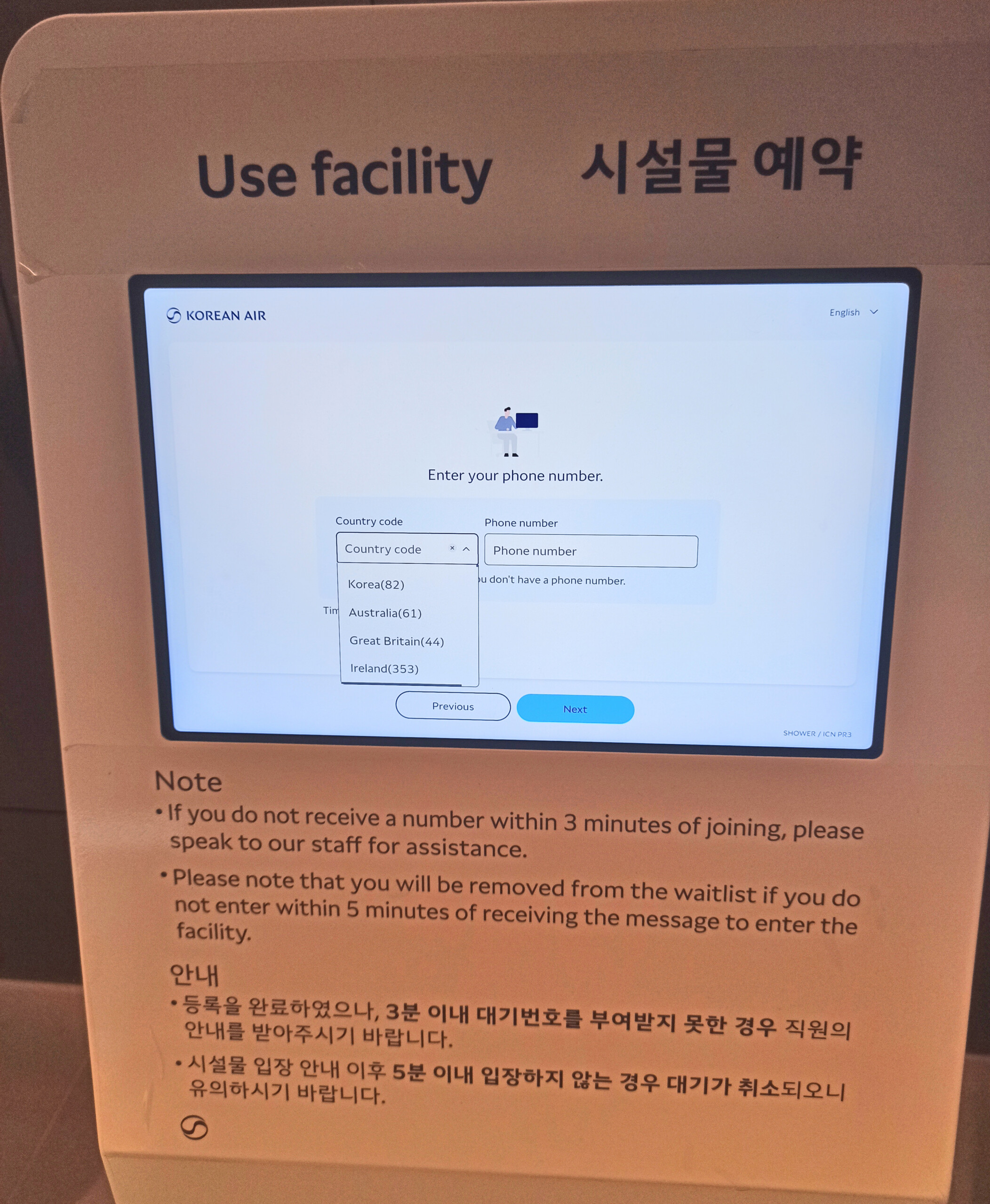
For some irritating reason, those looking to use the shower have to register their phone numbers (as in, wait to be called). However, when I went, there were no guests ahead of me…although the attendant still requested my phone number. I told her to use my boarding pass info instead, which she did.
The shower room was large, but unlike the Air China lounge shower from my Tianjin review, this one A) had a (20-minute) time limit, and B) was a bit noisy due to chattering passers-by.
After quite a while in the lounge, I went for a roundabout walk to my gate.
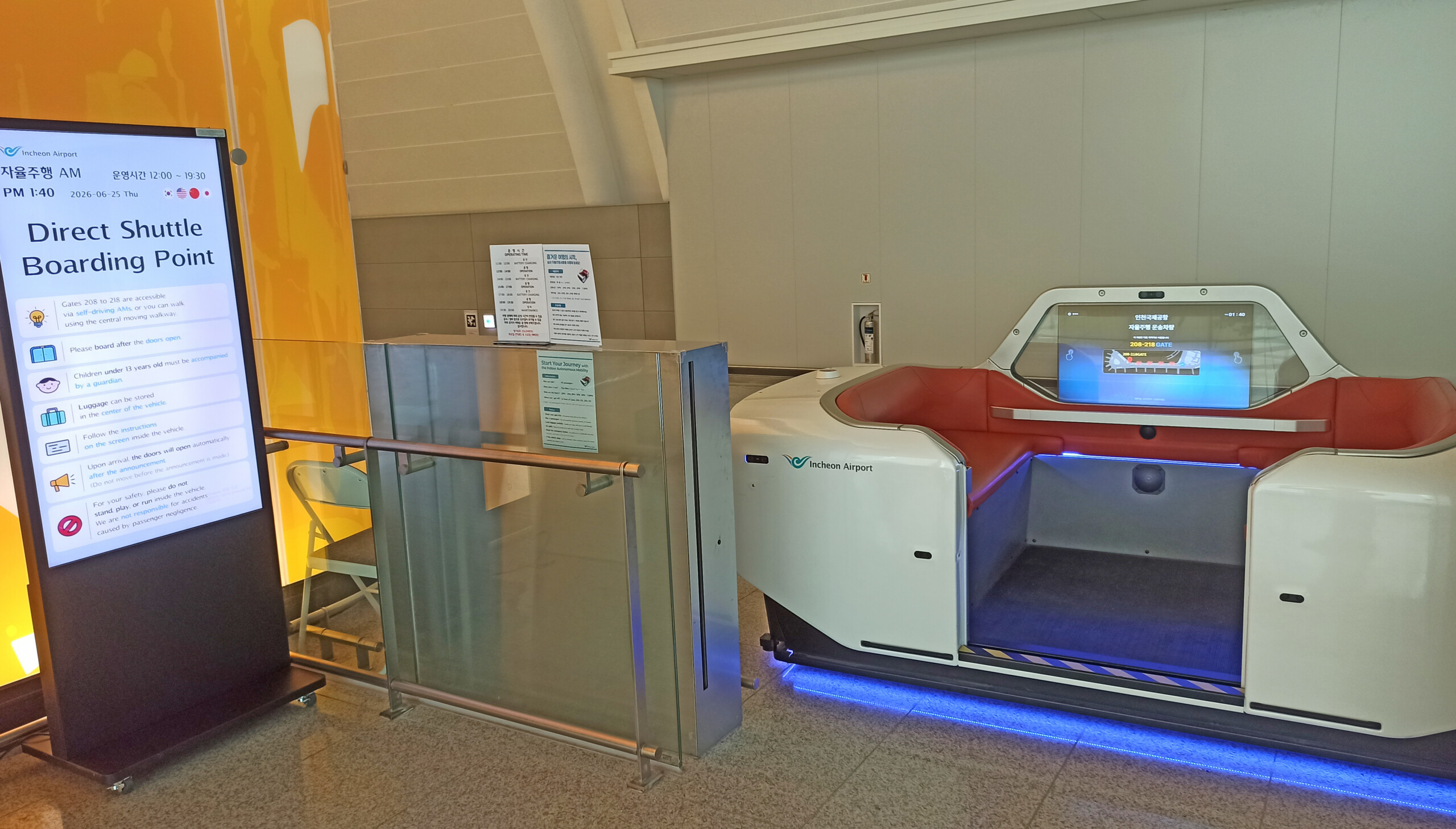
The walk included a couple of mindless rides on the mostly pointless autonomous vehicle found in a couple of sections of the terminal. I say pointless because it was doing more charging than transferring passengers to their gates.
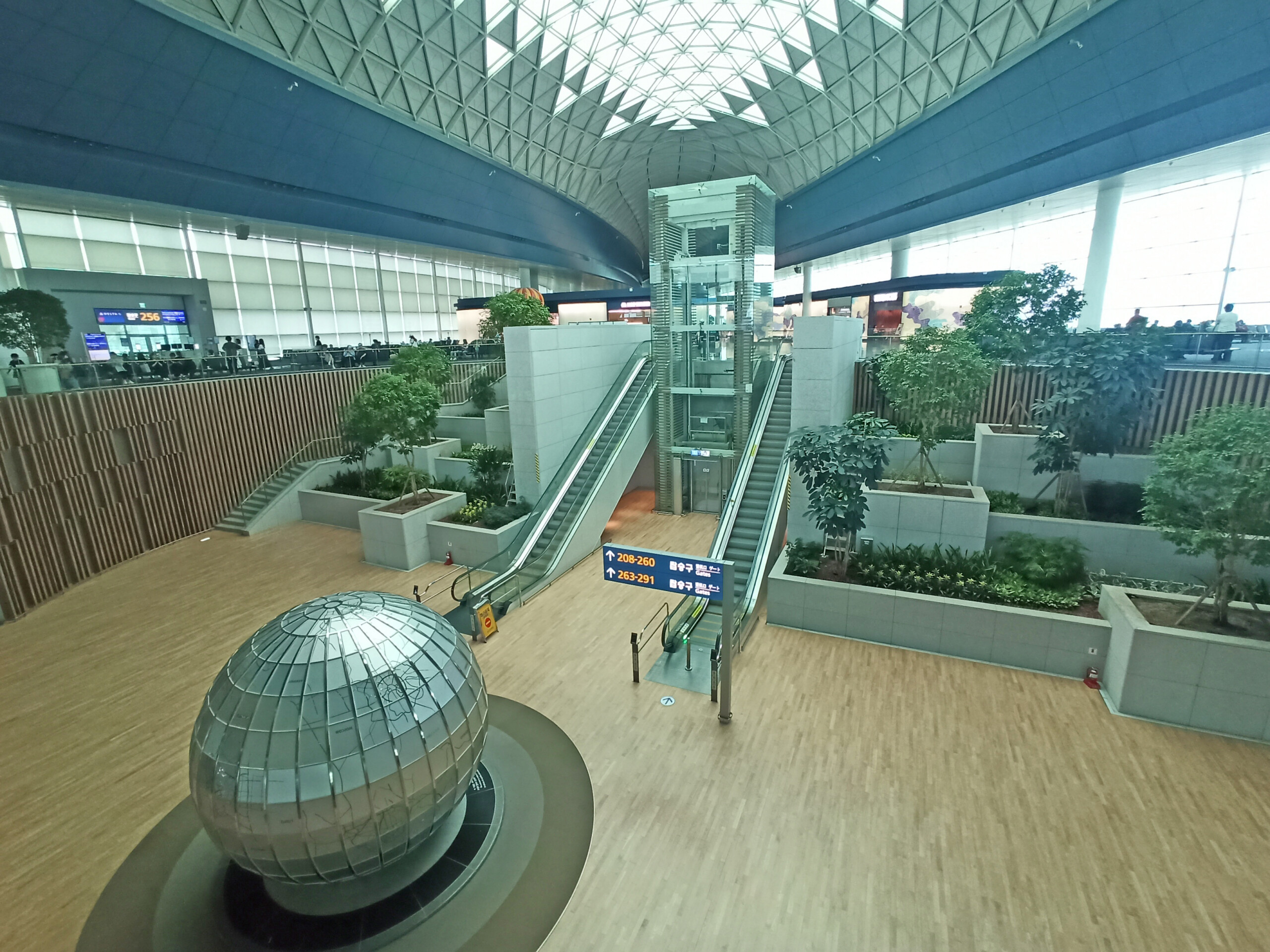
As boarding began a little late, I too a walk down to this kinda neat art installation with maps of various cities worldwide.
The flight to Kagoshima
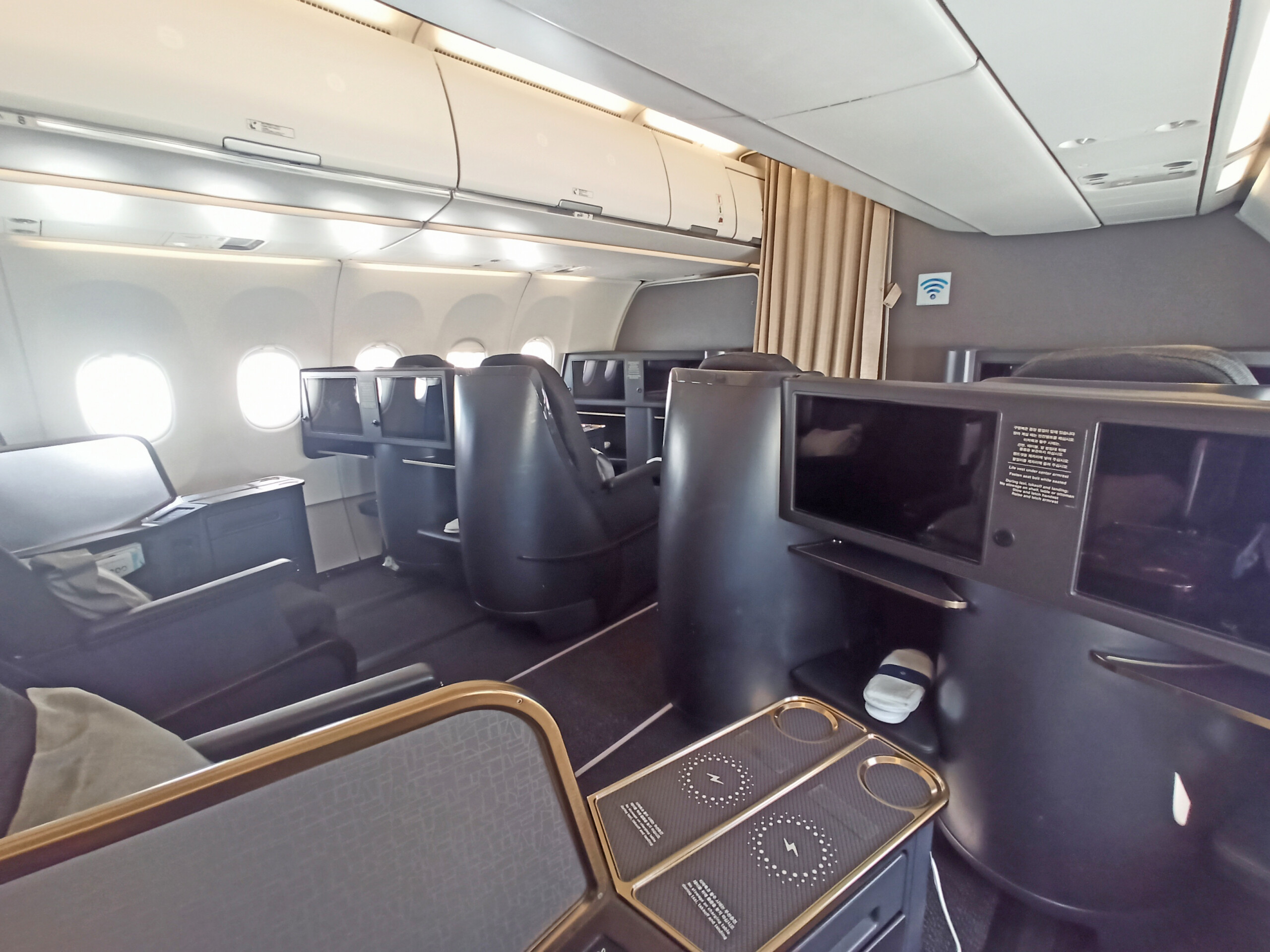
Here’s a new one for me: this was the first ever flight where I was the only one in business class. Yeah yeah, it’s a short hop, it’s a small cabin…still. It made making videos and taking photos that much easier.
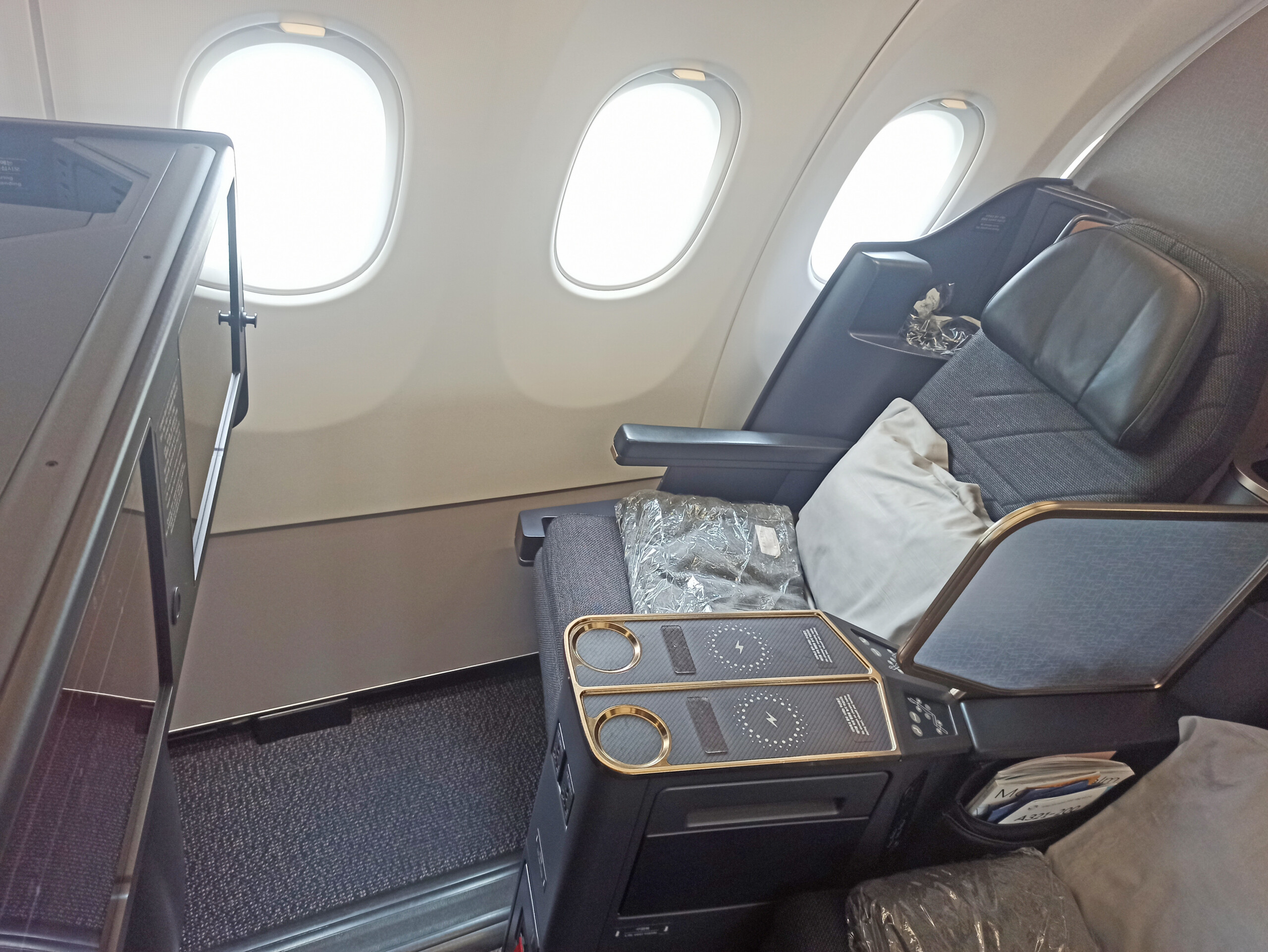
Oh, and it was an Airbus A321 with a lie-flat seat. Granted, there were about 30 minutes (of the 70 minute flight) where I couldn’t — nay, shouldn’t have been — lie-flat, but the option existed.
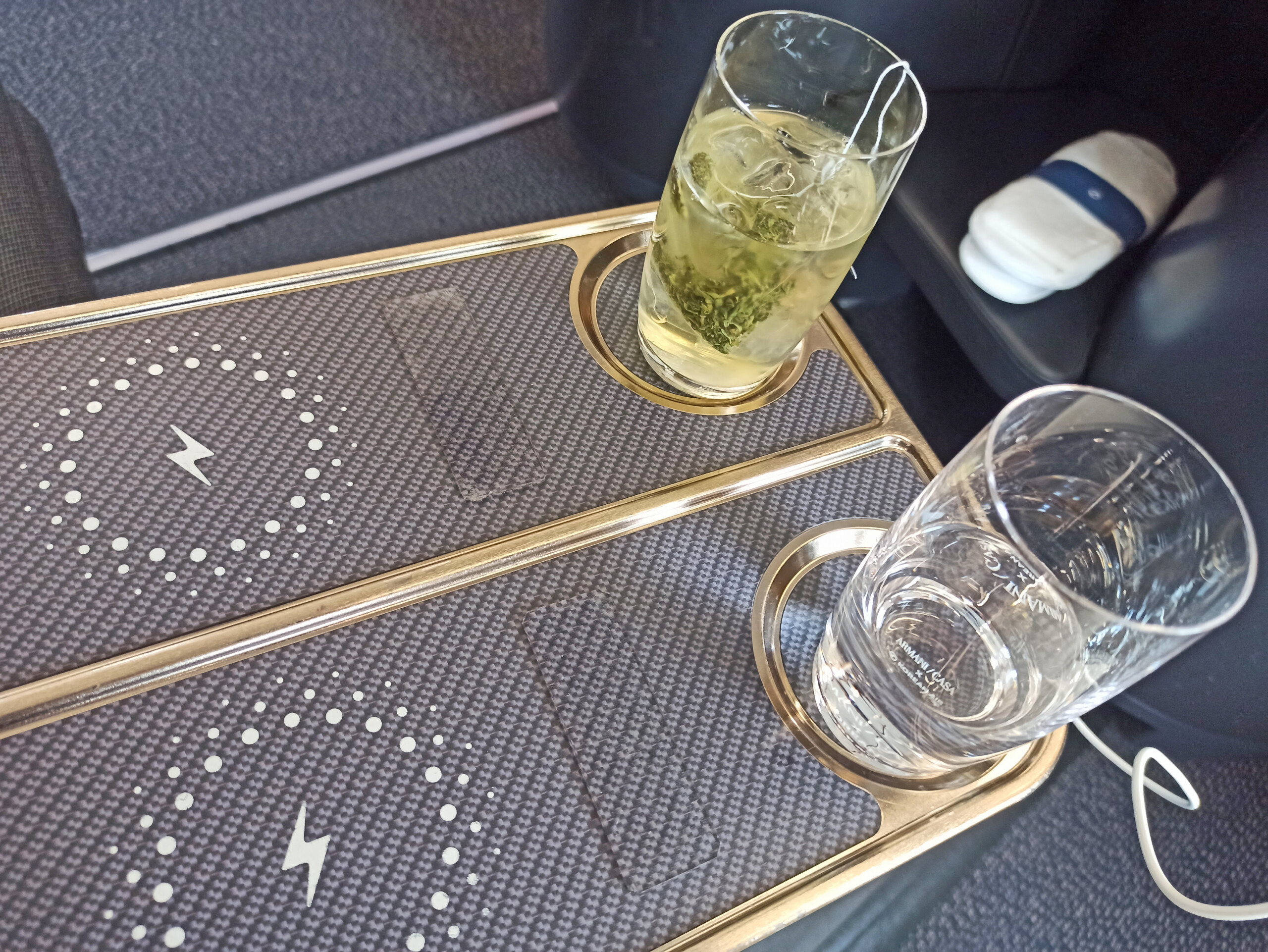
The flight attendant swung by asking about drinks, wherein again I was disappointed to hear that no Korean liquors were available).
Without having any distractions for the flight, by and large, I just watched the clouds.
The only interruption, albeit a worthwhile interruption, was the (pre-ordered) spicy octopus rice dosirak, err lunch box. On that note, when did bread become the staple of in-flight meals, especially those meals where bread serves less than no purpose?

A quick landing at Kagoshima’s one-runway jetport and a quick taxi to the gate were followed up with my being the first one through immigration (thanks to business class).
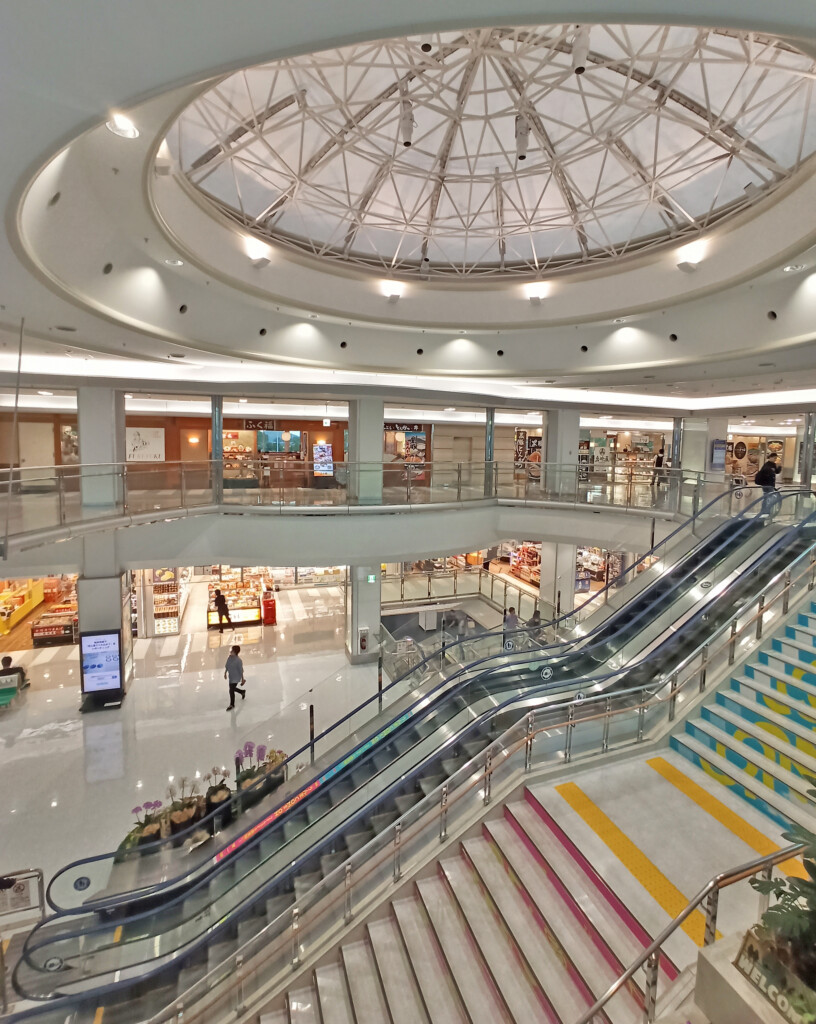
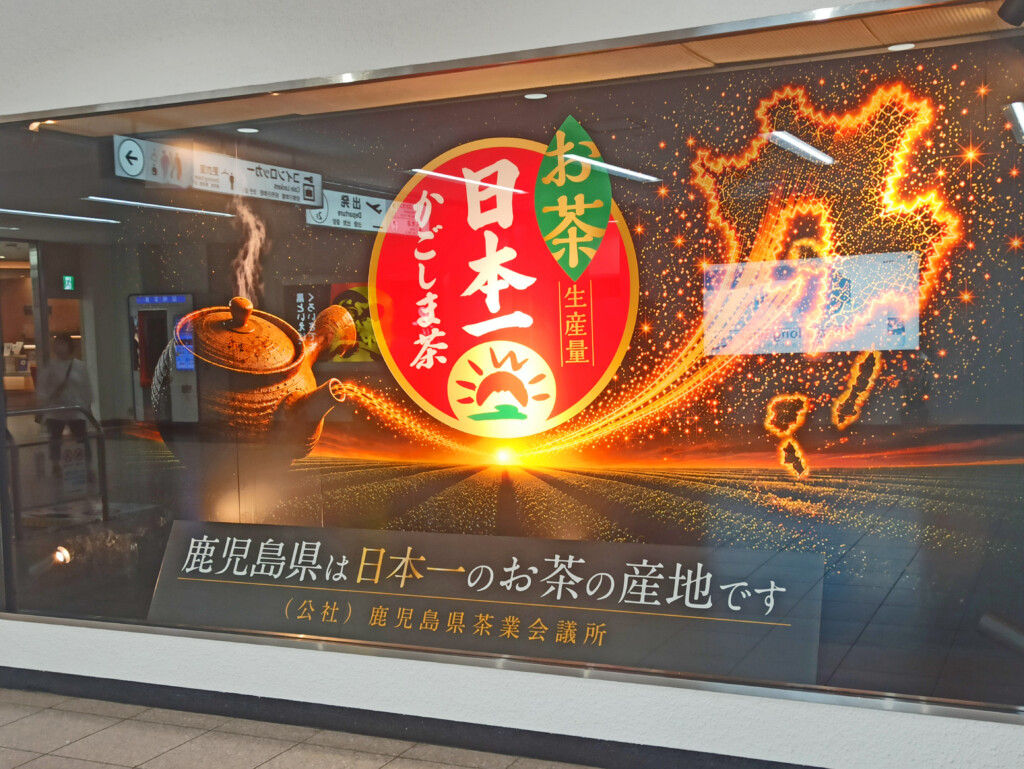
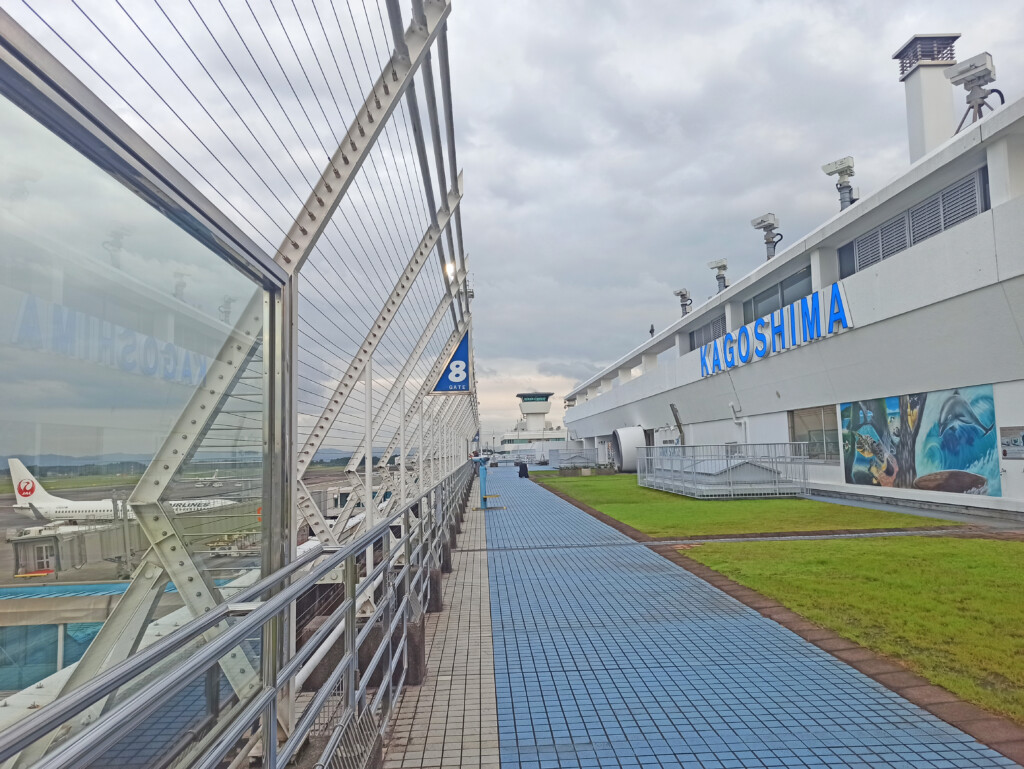
As buses to downtown Kagoshima were quite frequent, I went to explore the two staples of Japanese airports, food souvenir shops, and the observation deck.
Tally ’em up
Overall, my Tianjin – Seoul Incheon – Kagoshima flights were good. The flight attendants were sufficiently courteous, the meals were tasty enough, and the extra baggage allowance came in handy. And as much as I dug the bibimbap bar at the Korean Air lounge(s), a larger variety of food options, better shower queuing system, a quiet seating area, and the need not to scan tickets upon exit would’ve been big pluses.

Leave a Reply